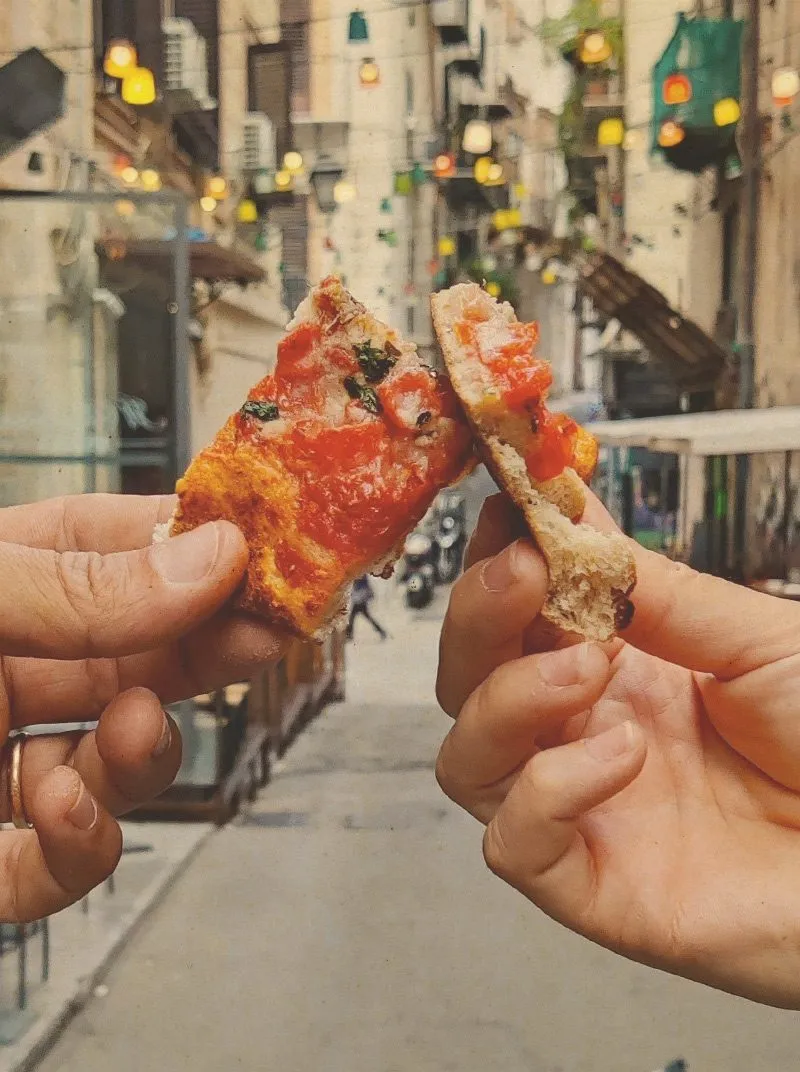
Sicilian pizza does not mean a round pie with a puffy edge. In Sicily, the pizza that carries the island's name is sfincione, a thick, spongy Palermo slice baked in a tray and topped with tomato, onion, anchovy, caciocavallo cheese, and a handful of toasted breadcrumbs. There is no mozzarella on a traditional sfincione, and it is eaten standing up, by the slice, off a paper napkin. The square "Sicilian" slice sold in American pizzerias is its grandchild.
OpenPizzaMap tracks 5244 hand-picked pizzerias across 360 cities. For Sicily, the island splits into two scenes: the street pizza of Palermo and the wood-fired pizzerie of Catania under Etna.
What makes a pizza Sicilian?
The Sicilian original is sfincione, and its name comes from spongia, sponge, which is exactly what the base is. The dough runs at a high hydration and proves soft and airy, then bakes in an oiled rectangular tray into something closer to focaccia than to a Neapolitan round. The bottom fries a little in the oil; the top stays open and pillowy.
The Palermo topping order is its own signature. Under a sauce of tomato and onion go anchovies and cubes of caciocavallo or the local tuma cheese, seasoned with oregano, and the whole thing is finished with toasted breadcrumbs (mollica) instead of a cheese blanket. That is the tell: a real Palermo sfincione is capped with crumbs, not melted mozzarella.

Sfincione, Palermo's street slice
Sfincione is street food first. It is sold by the slice from the carts of the sfincionari, the vendors who work Palermo's markets at Ballarò, the Vucciria, and Il Capo, and it is tied to the calendar: families eat it around Christmas and the feast of the Immacolata in December. Assud a Santamarina, a Sicilian pizzeria in the city, is one of the sit-down spots keeping the Palermo style on a menu rather than a cart, but the tradition still belongs to the markets and the neighborhood forni.
There is a village rivalry inside the style, too. Bagheria, just east of Palermo, bakes its own sfincione bagherese with a different cheese and a firmer crumb, and Palermitani will argue the two are not the same pizza at all.
How sfincione became the American Sicilian slice
When Sicilians emigrated to the United States in the early twentieth century, they brought sfincione with them, and it became the thick rectangular Sicilian slice, often just called a "square." Along the way it picked up a mozzarella top that the Palermo version never had, and the anchovy and breadcrumb finish mostly fell away. So the American Sicilian slice and the Palermo sfincione are the same family tree, a couple of generations and one ocean apart.
Beyond sfincione: Catania's wood-fired scene
Away from the sfincione carts, Sicily also runs a serious wood-fired scene, most of it in Catania, on the eastern coast under Mount Etna.
Sciara Pizzeria Vulcanica works a contemporary round in Catania, puffed and charred at the rim and finished with toppings like burrata and Sicilian cherry tomatoes, a world away from the tray-baked sfincione but proof of how far the island's pizza now reaches.
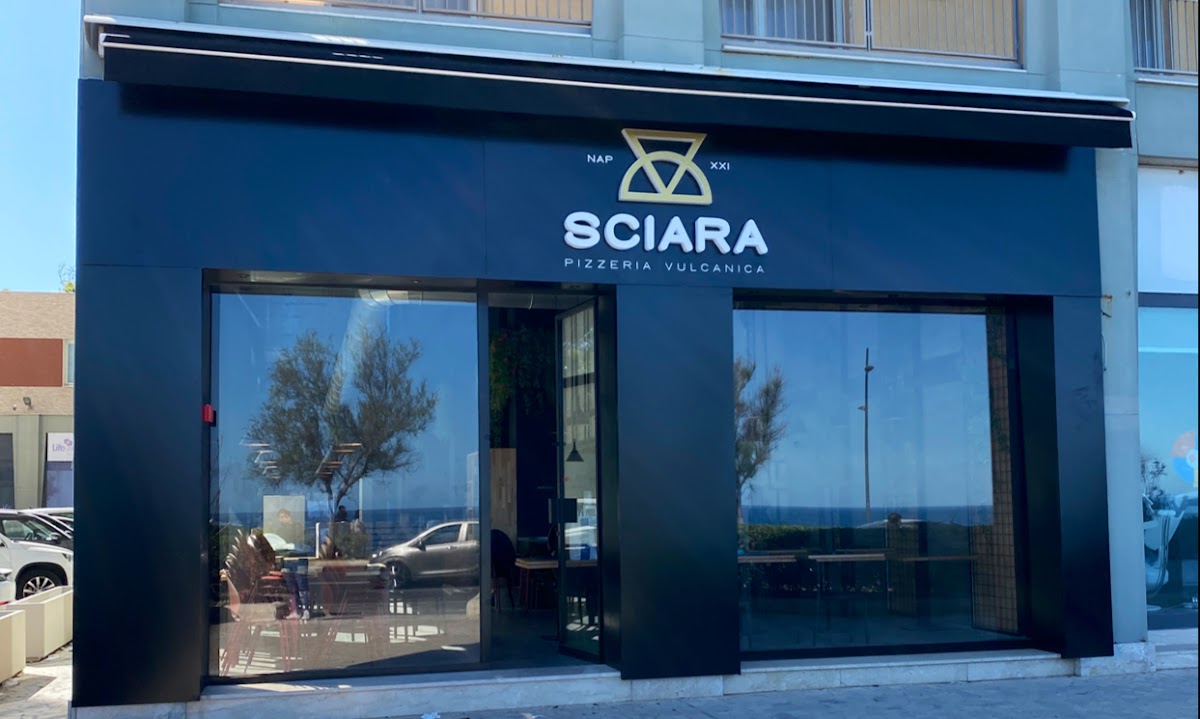
Sciara Pizzeria Vulcanica
€€€€ · 1,106 reviews
Pizza Lovers say: "Pistachio pizza and Queen Margaret are highlights, with good sourdough crust. One reviewer found their pizza lacked flavor, and road noise was an issue for outdoor seating."
Pizzeria del Plebiscito is one of Catania's long-running pizzerie, near Piazza del Plebiscito, turning out wood-oven pizza from a vaulted dining hall hung with Sicilian pupi and old market signs.
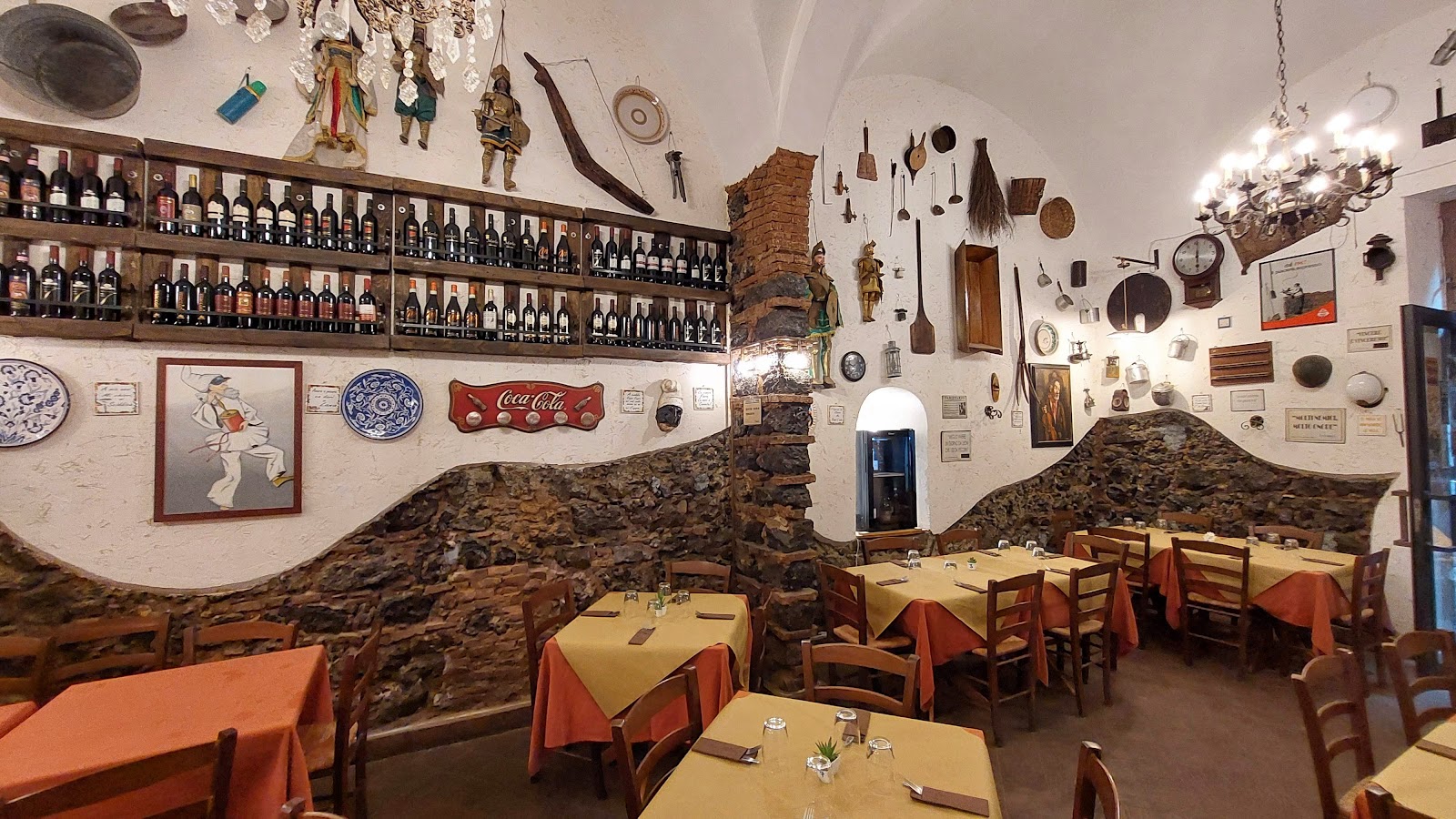
Pizzeria del Plebiscito
€€€€ · 258 reviews
Pizza Lovers say: "Delicious pizzas from an award-winning chef, great value, and friendly staff. Some communication barriers with staff require basic Italian or pointing."
How to tell it apart
If it is a thick rectangle, spongy underneath, capped with breadcrumbs and no mozzarella, you are eating sfincione, the Sicilian original. If it is a thick square with cheese melted across the top, you are eating its American descendant. And if it is a thin, charred round on a plate in Catania, you are eating the island's newer, wood-fired answer to Naples. All three are Sicily, and on the map they run from the market carts of Palermo to the Etna-side counters of Catania.