For decades, pizza in London meant Pizza Express on the high street and Domino's on a Friday night. The first real crack in that came from Brixton in 2008, when Franco Manca started selling slow-proofed sourdough Neapolitan and locals lined up in the rain for it. Between 2012 and 2019 the Naples names followed, and the map filled in. That is act one, and it is worth eating through.
Act two is the one that changed the character of the city, and it did not come from Naples. It came out of back gardens and pub kitchens during the 2020 lockdown, when a wave of cooks bought countertop ovens, made dough every day, and started building a pizza that is neither Neapolitan nor New York. The trade has a loose name for it now: London style.
What is London style pizza?
Ask ten pizzaioli and you get ten answers, which is the point. The through line is this: take the airy, fermented crumb of a Naples dough, make it bigger and sturdier like a New York pie, and bake it longer, roughly four to five minutes instead of the 60 to 90 seconds a Neapolitan spends in a wood oven near 450 degrees Celsius. You get a puffed edge and a base that actually crackles. Then the London signatures go on: a crust brushed with oil, a drizzle of hot honey, parmesan grated over the top on a microplane, and a dip on the side.
None of it is traditional, and that is the pitch. Hannah Dry, who runs Dough Hands, calls it "uncategorizable pizza that's not New York, not Neapolitan, not Detroit," just cooks building the pie they want to eat.
The new-wave rooms
The three rooms most often tagged with London style are within a short ride of each other, and each got there a different way.
Crisp lives downstairs at The Marlborough, a Marylebone pub. Carl McGarr spent two years making dough every day before he opened, and the menu shows it: 12-inch pies, square bar pies, and a grandma, built on Neapolitan flour but a New York dough recipe, baked dark and crisp closer to New Haven than Naples. The room seats 57 and books out weeks ahead.
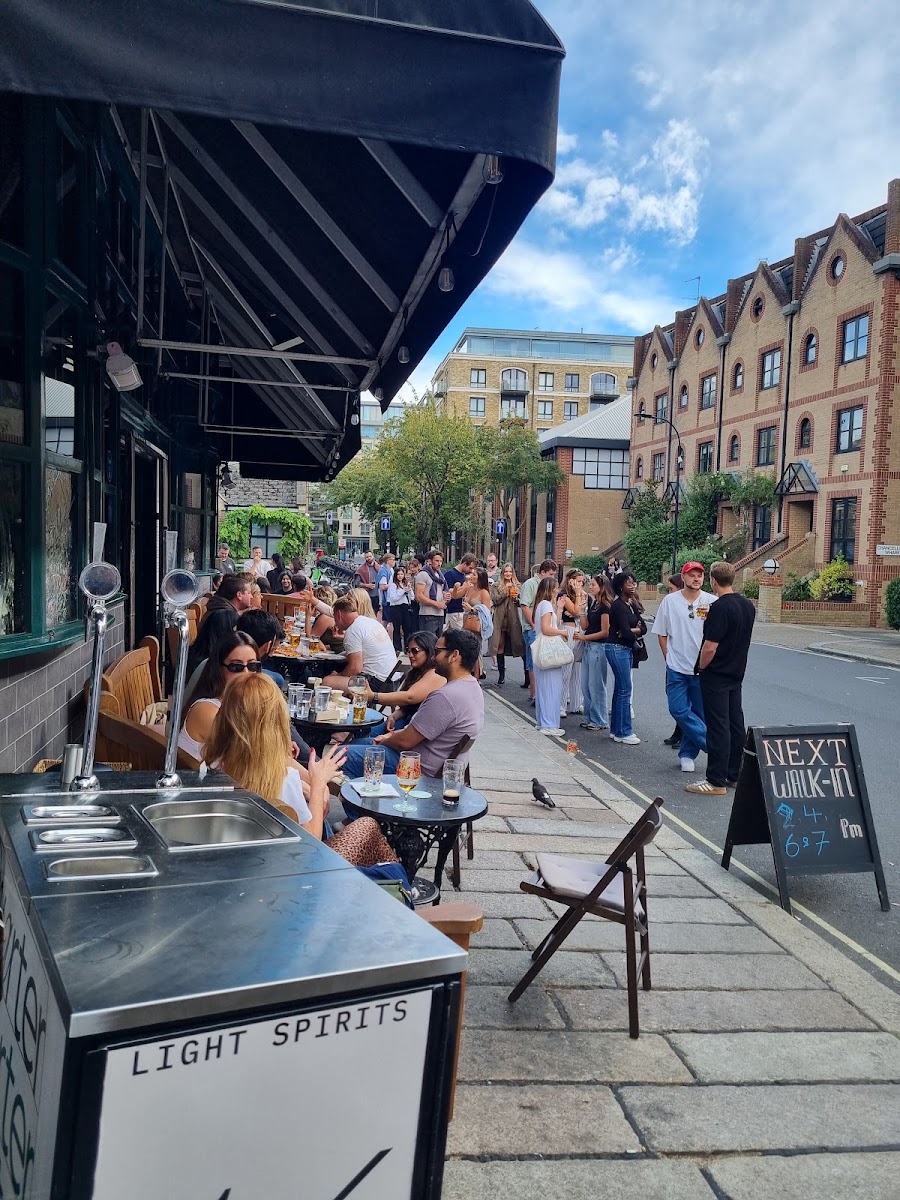
Crisp Pizza
€€€€ · 456 reviews
Pizza Lovers say: "Praised for authentic New Haven Apizza and great crust. Walk-in availability can be challenging."
Dough Hands is a pub residency too, at the Spurstowe Arms in Hackney. Hannah Dry started answering phones at a Brighton pizzeria, then used the 2020 lockdown to build her own thing. The dough carries semolina for crunch, the sauce is San Marzano tomatoes and salt and nothing else, and the bake runs four to five minutes so the crust sets up with real body. It comes out oiled, hit with hot honey and basil. On a busy day the kitchen turns out around 450 pizzas.
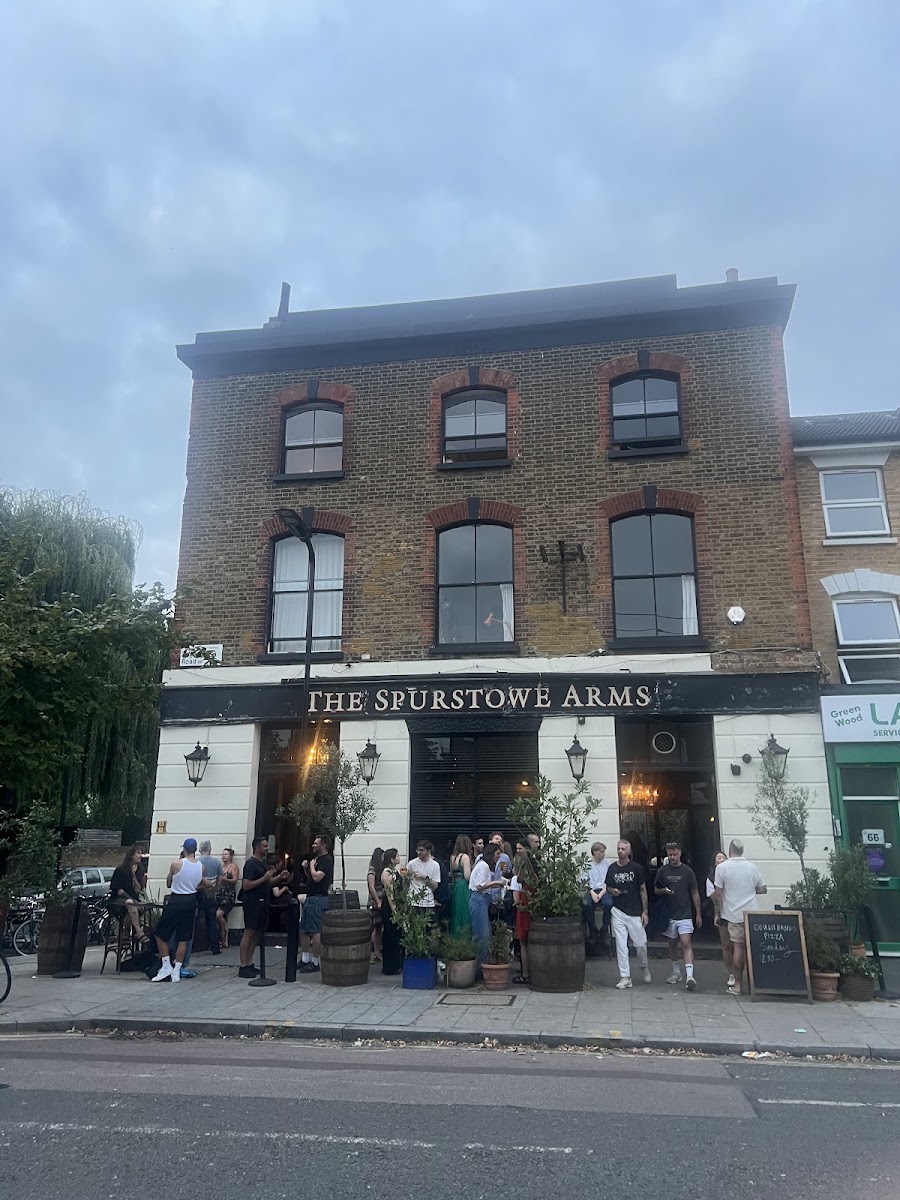
Dough Hands
€€€€ · 209 reviews
Pizza Lovers say: "Sublime pizza with fresh ingredients and excellent dough, generous cheese. Can be busy."
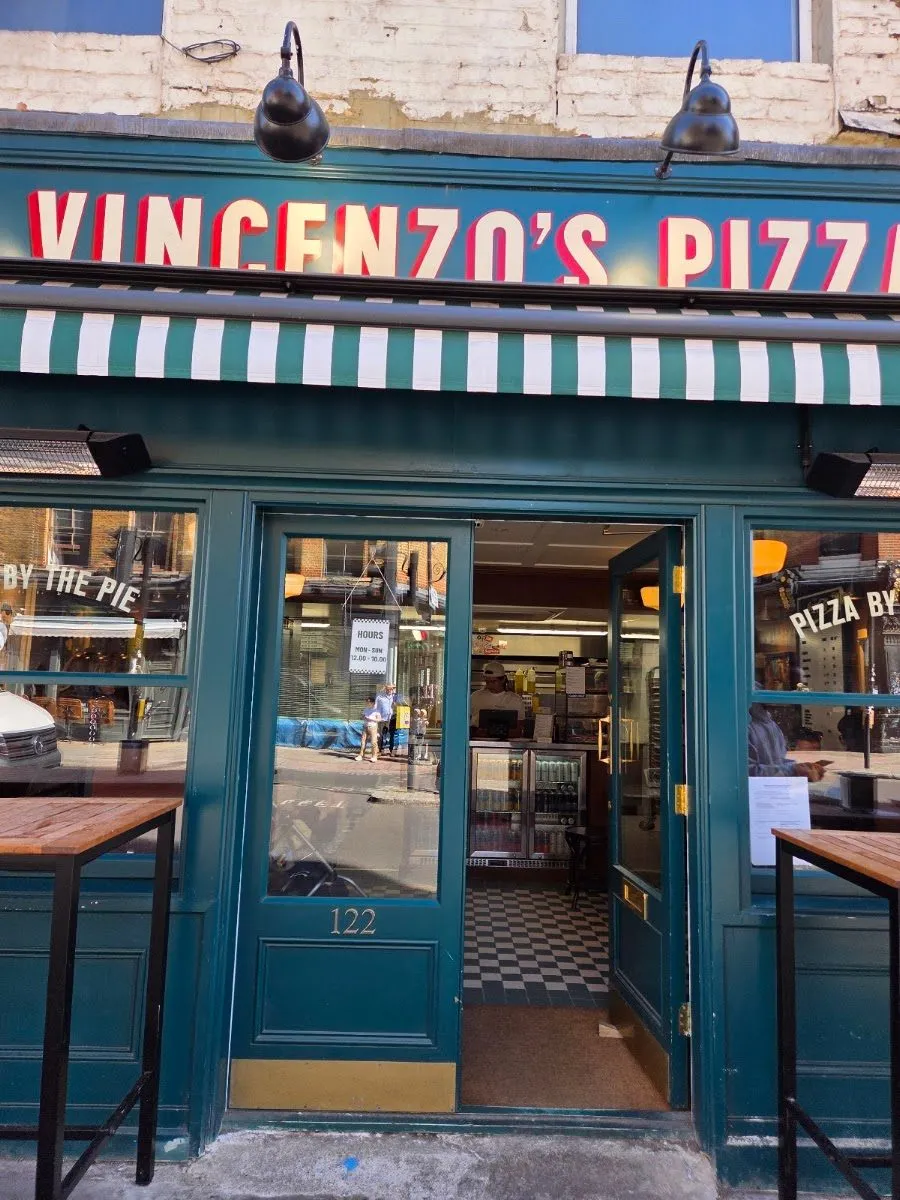
Vincenzo's in Shoreditch is Tom Vincent's take on old coal-oven East Coast pizza, the rustic style first-generation Italian immigrants baked in New York a century ago. He proofs the dough 48 hours, opens it to 18 inches, uses two mozzarellas (one dried, one fresh) and layers the sauce in two passes. The shop is tiny and runs about 200 pizzas a day. Vincent is a painter, and the art on the walls is his.
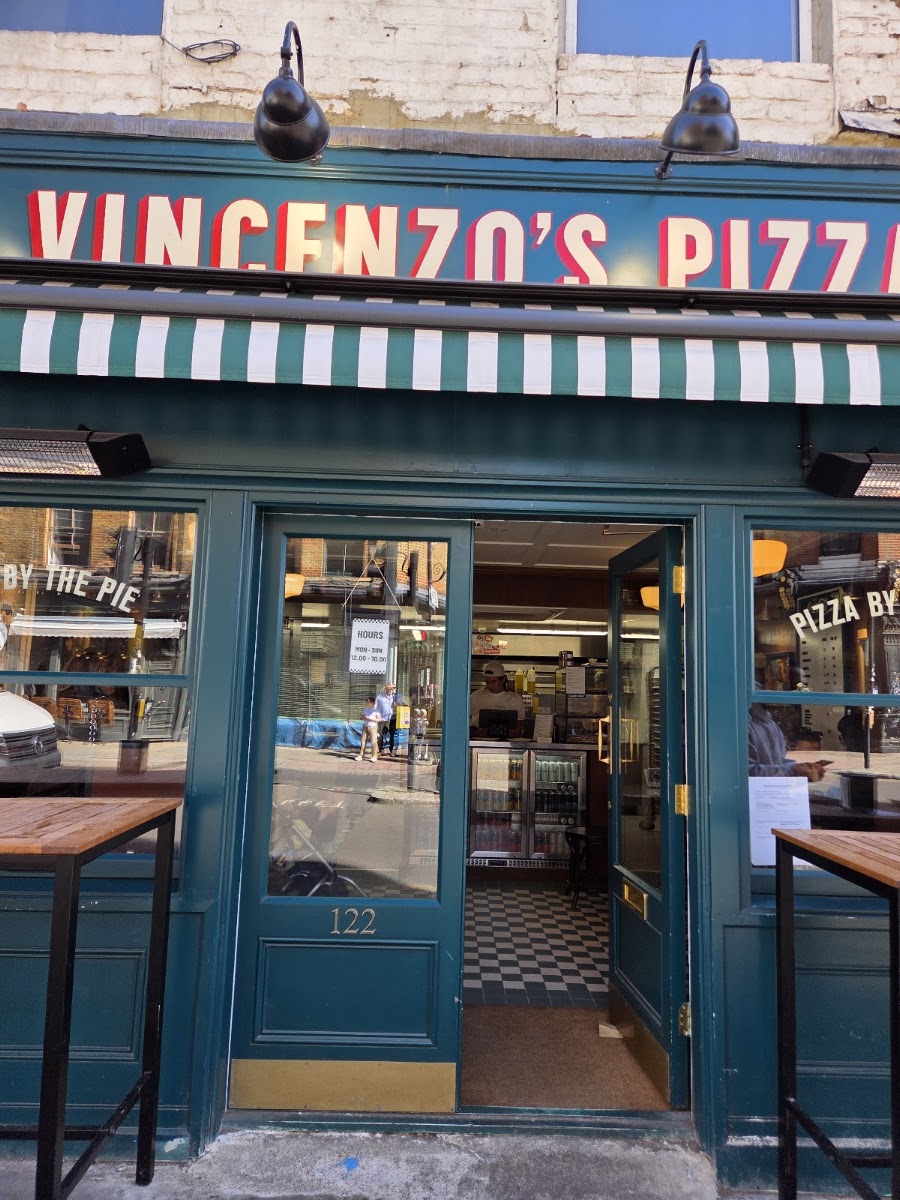
Vincenzo's Pizza
€€€€ · 392 reviews
Pizza Lovers say: "The vodka and burrata slices are praised for their rich flavor and crispy, airy dough. Portions are big and thin."
The slice shops and the imports
The new wave is not only pubs. A slice culture has grown up beside it, most of it priced around seven to eight pounds a slice and reheated to order.
Breadstall sells fat New York slices off a market counter, reheated in about 30 seconds, with a vodka slice, a spicy pepperoni finished with a careful amount of hot honey, and dips (truffle, 'nduja) that lean into the very British habit of dipping the crust. It even runs a chocolate ganache dip for the corners you leave behind. Bad Boy Pizza Society in Seven Dials took a London slice award in both 2022 and 2024, and backs it up with a heavily loaded pepperoni and its own hot-honey habit. Over in Ealing, Sav's Slice does Detroit-style squares inside the Broadway Picturehouse; Sav trained in Michelin kitchens in London and Singapore before he started selling pizza out of a cinema.
Two more worth the trip out of the center. Gracie's works a New Haven angle from the Arcade food hall inside Battersea Power Station: thin, blistered, fermented crusts and classic East Coast toppings. And in Kingston, Patio Pizza sits next door to the shop Alim Nail's father has run for 26 years; Nail grew up on Afghan flatbread and now builds a pie topped with whipped ricotta, 30-month parmesan and hot honey he makes in house.
The Naples bench that set the table
None of the new wave happens without the Neapolitan boom that came first, and several of those rooms still turn out the reference Margherita against which the newcomers get judged.
Franco Manca started it in Brixton Market in 2008, and the original shop still earns its spot even as the name grew into a chain. Pizza Pilgrims came next: brothers James and Thom Elliot drove the length of Italy in a three-wheeler, learned from Da Michele in Naples, and built a wood-oven Neapolitan they have since taken to more than 25 sites. Their Dean Street room in Soho is the one to sit in.
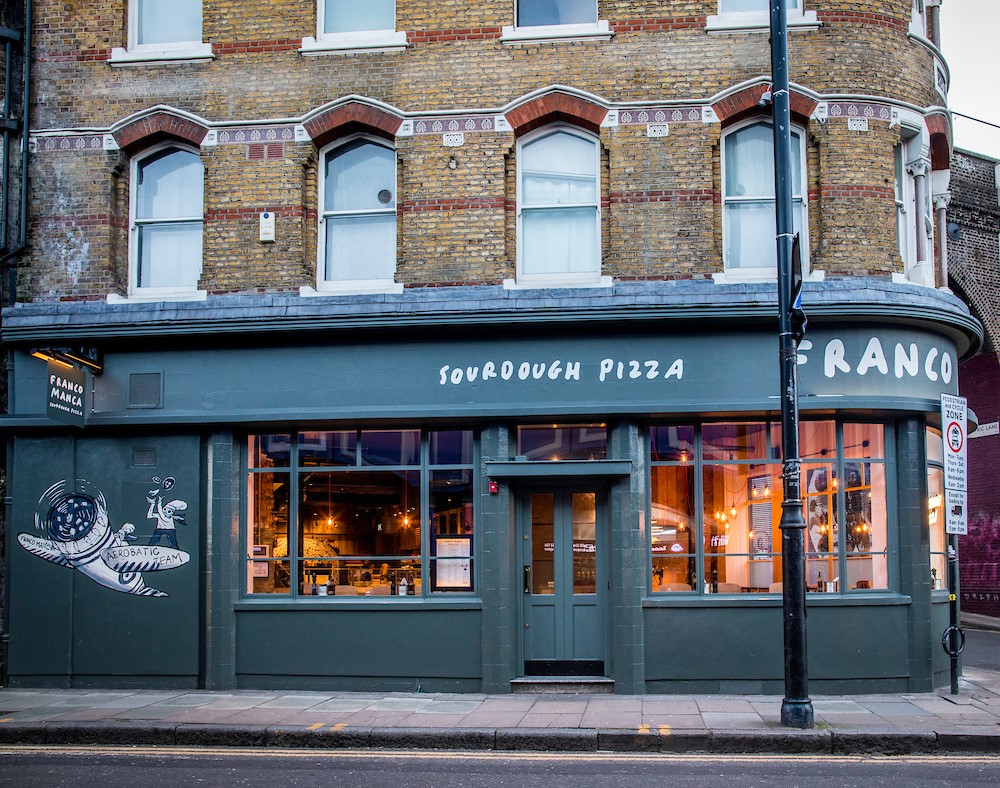
Franco Manca Brixton Market
€€€€ · 919 reviews
Pizza Lovers say: "Delicious, fresh pizzas and excellent, friendly service. Some find it a bit pricey, but the quality is consistently good."
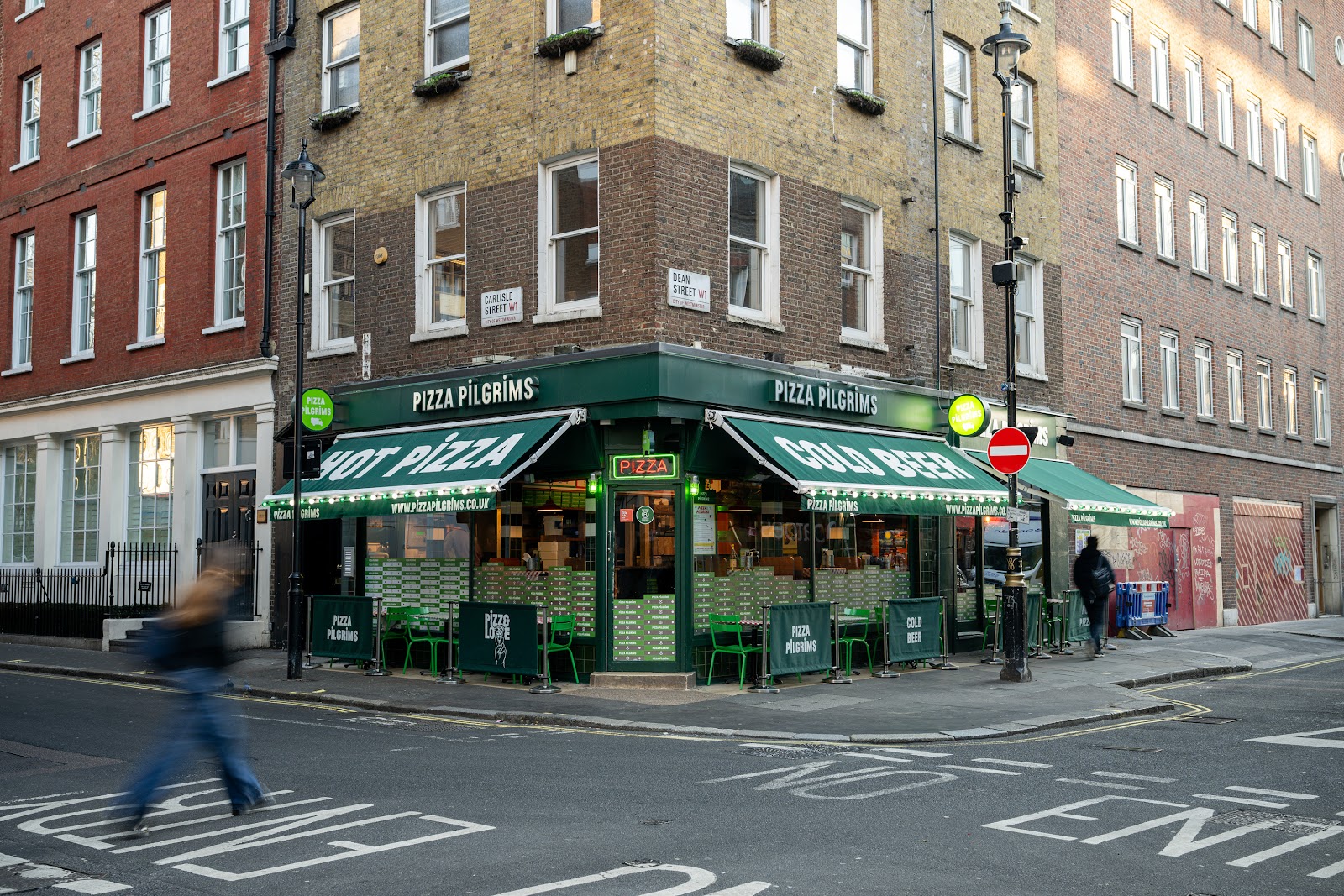
Pizza Pilgrims 11 Dean St, London
€€€€
Pizza Lovers say: "Amazing gluten-free pizzas and a lovely house wine. Prices are okay."
50 Kalo is the high-water mark. Ciro Salvo is a third-generation Naples pizzaiolo whose Trafalgar Square room turns out roughly 600 pizzas a day on a high-hydration dough that puffs into a balloon at the edge. The Margherita is the reference order.
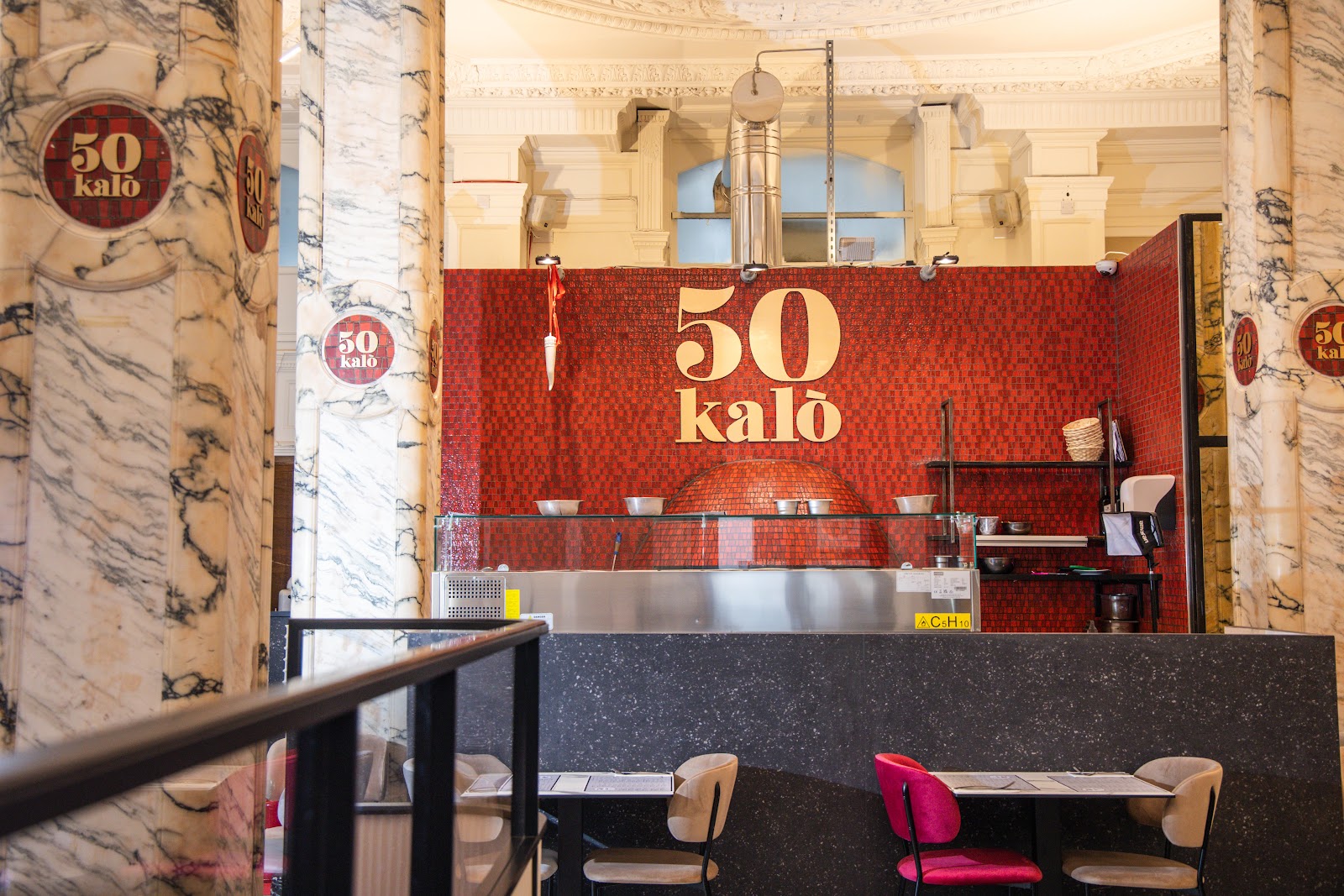
50 Kalò di Ciro Salvo Pizzeria London
€€€€ · 6,893 reviews
Pizza Lovers say: "Ciro Salvo's London outpost at Northumberland Avenue brings the same ultra-hydrated, 80% water content dough that earned him UNESCO recognition and Gambero Rosso's best-in-London title. Reservations strongly recommended."
For the Naples originals, L'Antica Pizzeria Da Michele brought its 1870 lineage to London with rooms near Baker Street and in Soho. Order the Marinara at both and watch the crust char; small differences in oven position show up fast on a two-ingredient pizza.
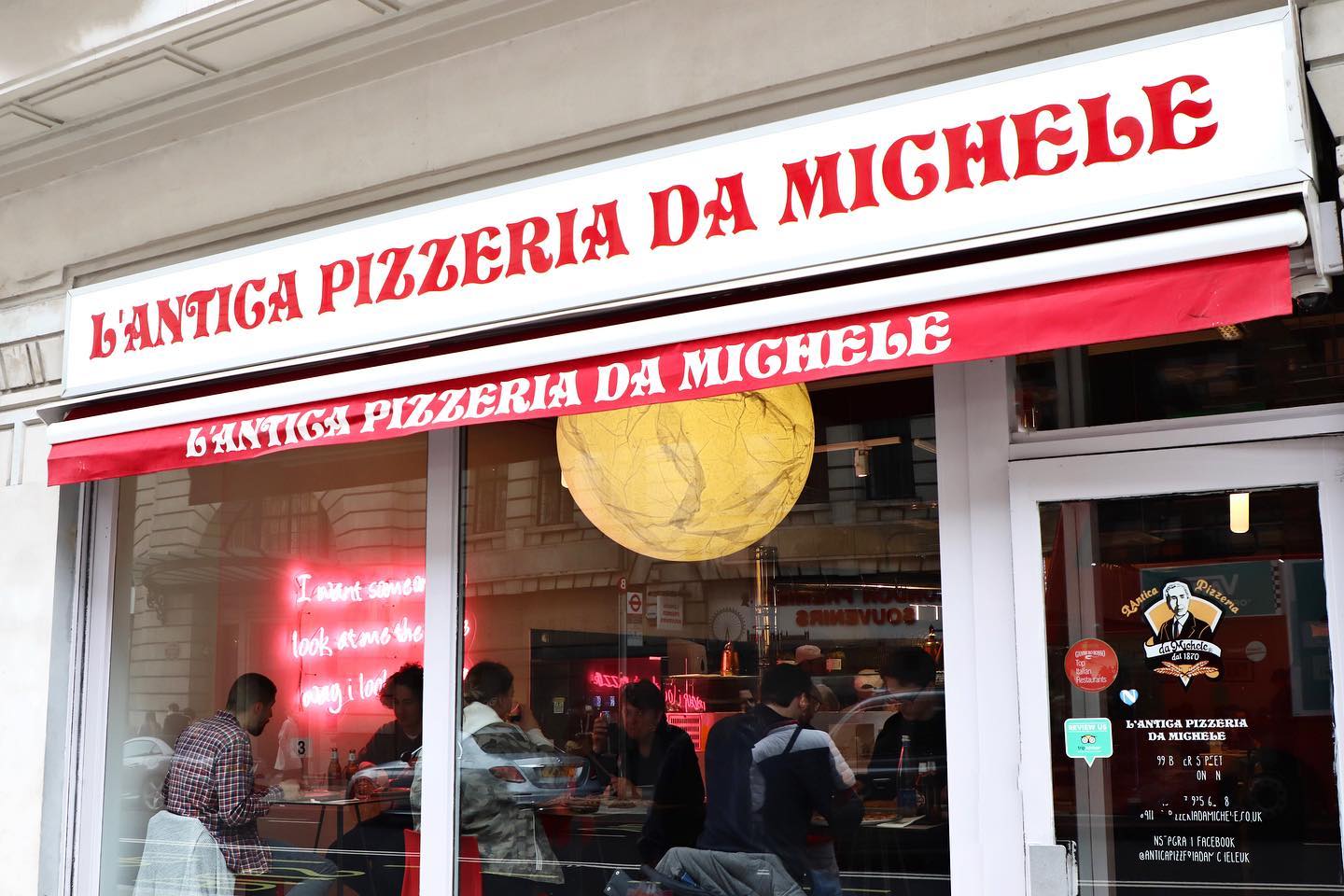
L’Antica Pizzeria Da Michele London (Baker Street)
€€€€ · 7,236 reviews
Pizza Lovers say: "Authentic Italian flavour, exceptional gluten-free base, and spectacular dishes like Parmigiana and Crocchè. However, some found the pizza watery and the food not special."
And for the cheapest great slice in town, Sud Italia works a blue van at Old Spitalfields Market, folding a proper Neapolitan Margherita into quarters for five pounds. Napoli on the Road in Chiswick rounds out the Neapolitan bench with a menu that changes on what is good that week.
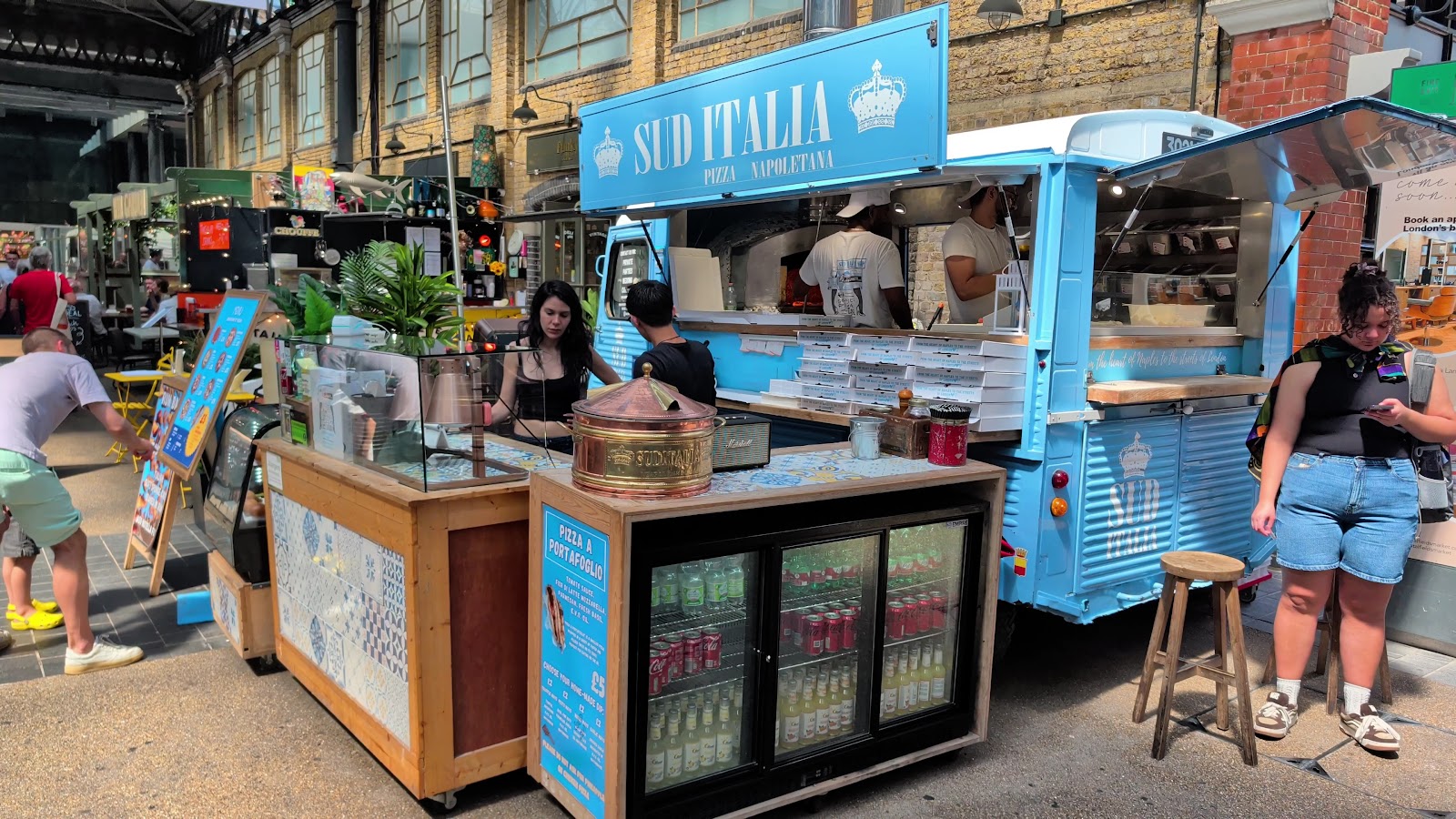
Sud Italia
€€€€ · 1,364 reviews
Pizza Lovers say: "Amazing, fresh pizzas with authentic Neapolitan taste and perfect crust. Portions are generous, but expect wait times at peak hours."
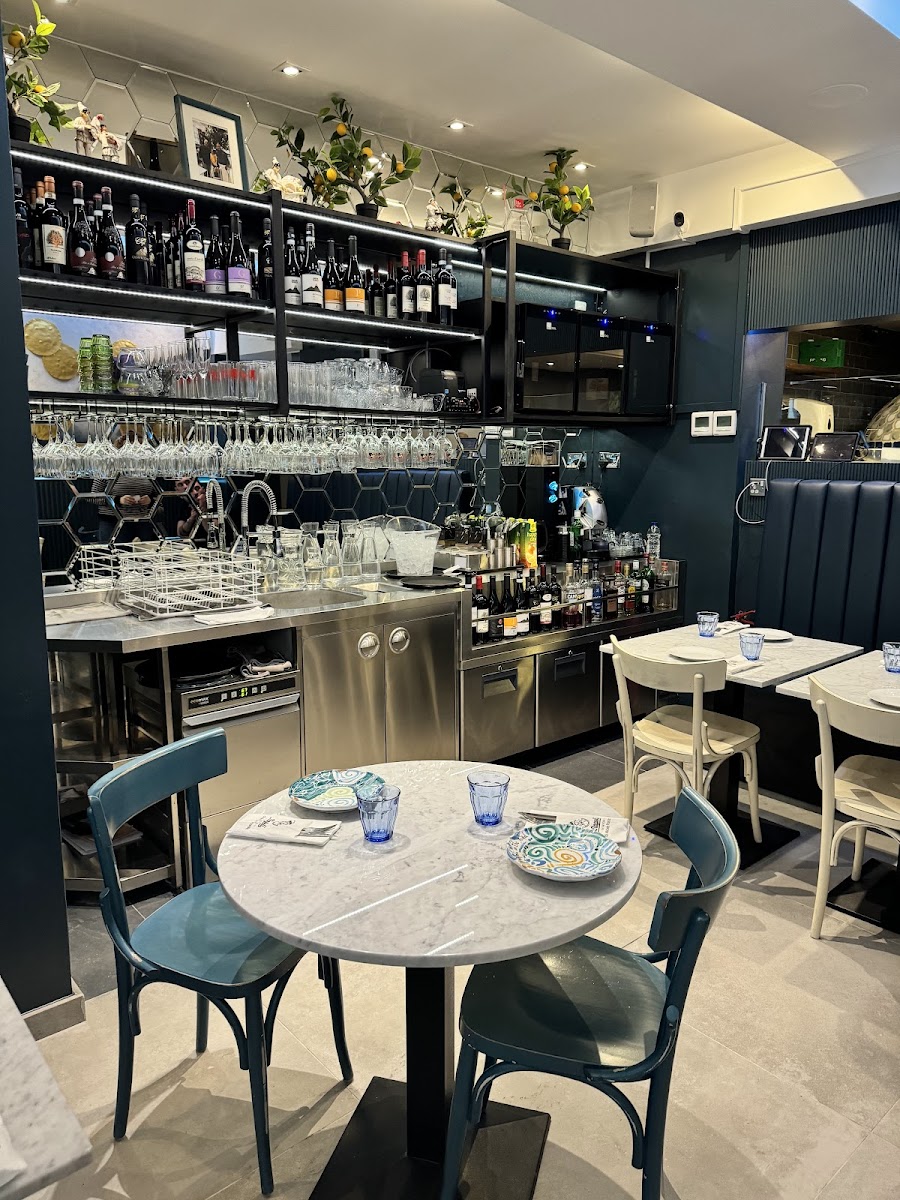
Napoli on the Road
€€€€ · 2,016 reviews
Pizza Lovers say: "Amazing doughy, award-winning pizza with creative toppings like Cheesewick. Deserts were just okay."
The ranked list
| Rank | Spot | City | Style | Why |
|---|---|---|---|---|
| 1 | Vincenzo's Pizza | London | NY-Style | Shoreditch; 48-hour proof, coal-oven East Coast style, two mozzarellas, 18-inch pies |
| 2 | Dough Hands | London | NY-Style | Hackney; Spurstowe Arms residency, semolina crust, four to five minute bake, hot honey finish |
| 3 | Sud Italia | London E1 6AA | Neapolitan | Spitalfields; five-pound folded Margherita from a market van, Naples dough |
| 4 | Crisp Pizza | London | Apizza | Marylebone; two years of daily dough, Neapolitan flour on a New York recipe, grandma and bar pies |
| 5 | 50 Kalò di Ciro Salvo Pizzeria London | London | Neapolitan | Trafalgar Square; third-generation pizzaiolo, high-hydration dough, 600 pizzas a day |
| 6 | Napoli on the Road | London W4 2EU | Neapolitan | Chiswick; rotating Neapolitan menu, contemporary bake |
| 7 | Franco Manca Brixton Market | London | Neapolitan | Brixton; the 2008 sourdough room that started the London scene |
| 8 | Pizza Pilgrims 11 Dean St, London | London | Neapolitan | Soho; Da Michele-trained wood-oven Neapolitan, short classic menu |
Is London style even real?
Not everyone is sold on the label, including the people making it. Tom Vincent shrugs it off: he set out to make New York pizza, it came out like this, and whether that counts as a London style is, in his words, "not for me to say." The food writer Jimi Famurewa, after eating his way across the country, landed on the useful version: maybe there is not one London style, but there is one attitude, focus on quality, blend what works, and stop asking Naples or New York for permission.
That is the through line. London spent 15 years learning the rules, then a lockdown full of cooks decided the rules were optional. If you want to see how far it has come, our guide to Neapolitan pizza and its Naples sub-styles is the other half of the story.
How we ranked this
We sorted these rooms by what people who actually came for the pizza thought, weighted by what lands on the plate: a real ferment you can taste, a crust with structure, a bake that suits the style. Length of line and photo counts did not factor. The map moves fast, so this guide gets refreshed as rooms open, switch pubs or change pizzaioli.
Written and last refreshed in August 2026.