
Pizza a portafoglio is the Neapolitan pizza most visitors only find out about after they are standing on Via dei Tribunali, watching someone walk past with a folded paper triangle and a piece of dough flopping out of it. Then they cross the street and ask for one. Around two euros, on parchment, no plate, no table, no fork. That is the dish.
It is the cheapest serious pizza in Naples and one of the older formats the city still works. The name means wallet. The pizza is folded like one.
What is pizza a portafoglio?
A small Neapolitan pizza, around 18 to 22 centimeters across, with less tomato sauce than a sit-down Margherita and a small cube of fiordilatte rather than a full topping. The dough is the same Neapolitan dough; the proportions are different so it can be folded without leaking. The whole pizza is folded in half, then in half again, into a quarter-circle. That fold is the wallet.
When the dough is folded just once down the middle and held open like a paperback, the same pizza is called pizza a libretto, a little book. Same idea, different shape. Both are correct, and the names are used interchangeably by different shops.
The paper underneath is parchment or straw paper. The pizza is rarely served on a plate. Sometimes you get it already folded. Sometimes you get it open and you fold it yourself on the walk. Sometimes the shop hands it across the counter without folding at all, because the dough is so fresh it folds easily and the pizzaiolo trusts you.
How much does it cost?
Euro 1.50 to Euro 2 at most of the city's working shops. Euro 2.50 to Euro 3 at the famous addresses or near the tourist circuit. Above three is rare. The price is part of the dish; it would not be pizza a portafoglio if it cost five euros.
Where did it come from?
The long answer goes back further than the format itself. Pizza in Naples has been a working-class street food since the 18th century, and the city's poorest pizzaiolo trick has always been to make the pizza smaller, cheaper, and walkable. Antica Pizzeria Port'Alba opened on Via Port'Alba in 1738 as a kind of takeaway operation a hundred years before the dish even acquired the Margherita-marinara duality. The portafoglio is the modern descendant of that.
The specific format coalesced in the 20th century, especially after World War II, when wood was scarce and the pizzaiole, the women who ran Naples's pizza fronts while the men were at war or out of work, kept the trade alive by selling small, cheap, walking pizzas at street counters. The portafoglio became the daytime everyday format, while the sit-down ruota di carretta stayed the evening sit-down dish.
A second milestone was 1994, when Bill Clinton stopped at Antica Pizzeria e Friggitoria Di Matteo on Via dei Tribunali and ate a folded one at the counter. The shop has a photo. The line outside got worse. The dish got a paragraph in every guidebook to the city.
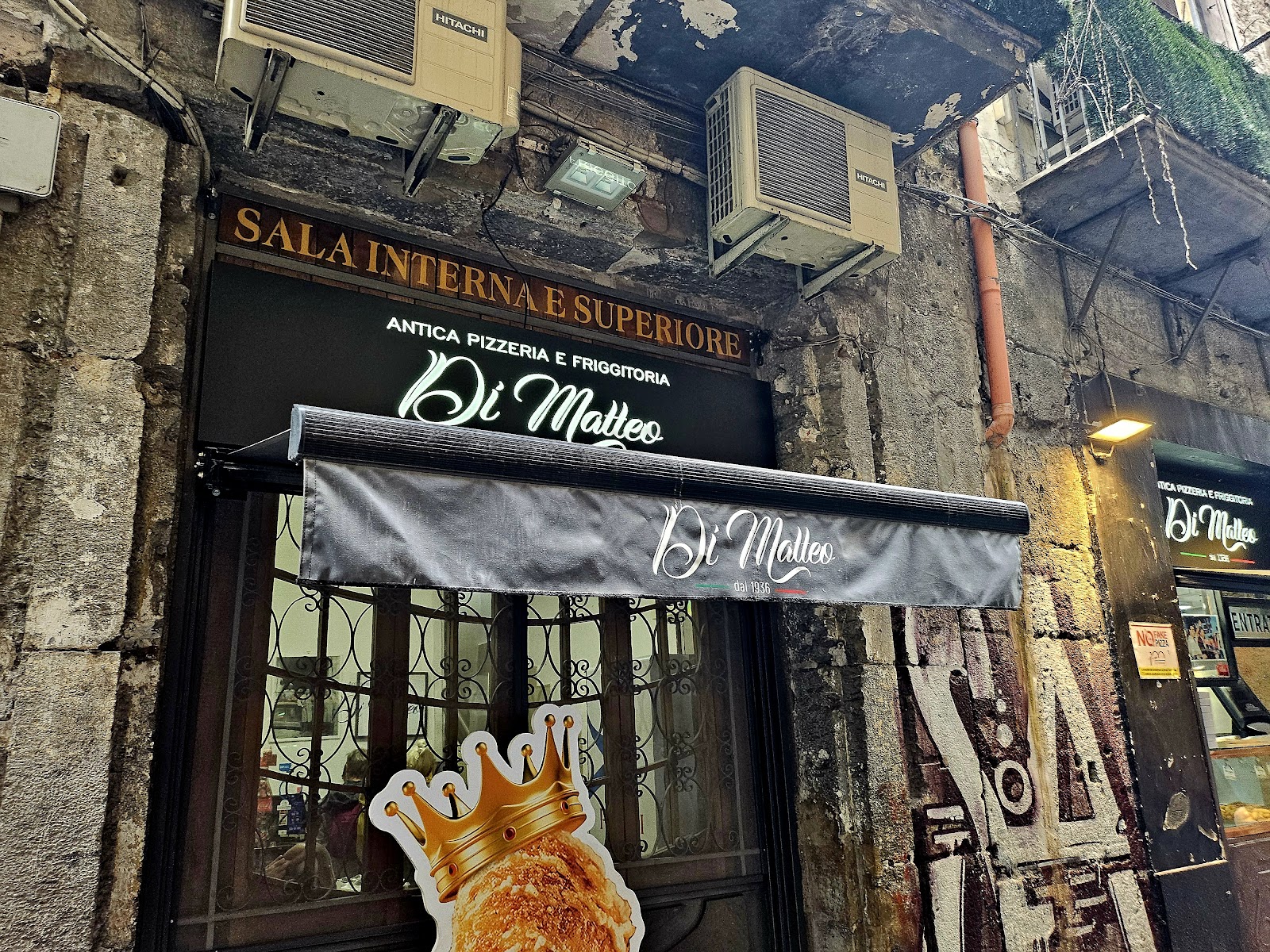
Antica Pizzeria e Friggitoria Di Matteo
€€€€ · 14,416 reviews
Pizza Lovers say: "Excellent Arancino and tasty Margherita pizza, but can be wet in the middle and not worth a long wait."
Where to eat it in Naples
The historical address is Antica Pizzeria Port'Alba, opened 1738, on Via Port'Alba. The shop itself is older than the United States. The portafoglio at the counter, with the cellar oven going behind you, is part of the same continuous trade.
Antica Pizzeria Port'Alba
€€€€ · 1,497 reviews
Pizza Lovers say: "Amazing pizza and value for money, but be prepared for long queues. One reviewer found a pizza awful and overpriced."
The famous address is Antica Pizzeria e Friggitoria Di Matteo on Via dei Tribunali, the Clinton shop, where you can stand at the counter and get one folded, hot, and walking-ready inside about a minute. Di Matteo also runs the pizza fritta side, which is the other working-class branch of the same dough.
For the modern reference, L'Antica Pizzeria da Michele on Via Cesare Sersale has portafoglio as an option next to the sit-down ruota di carretta. The line at the door is for the sit-down. The takeaway counter at the side runs faster.
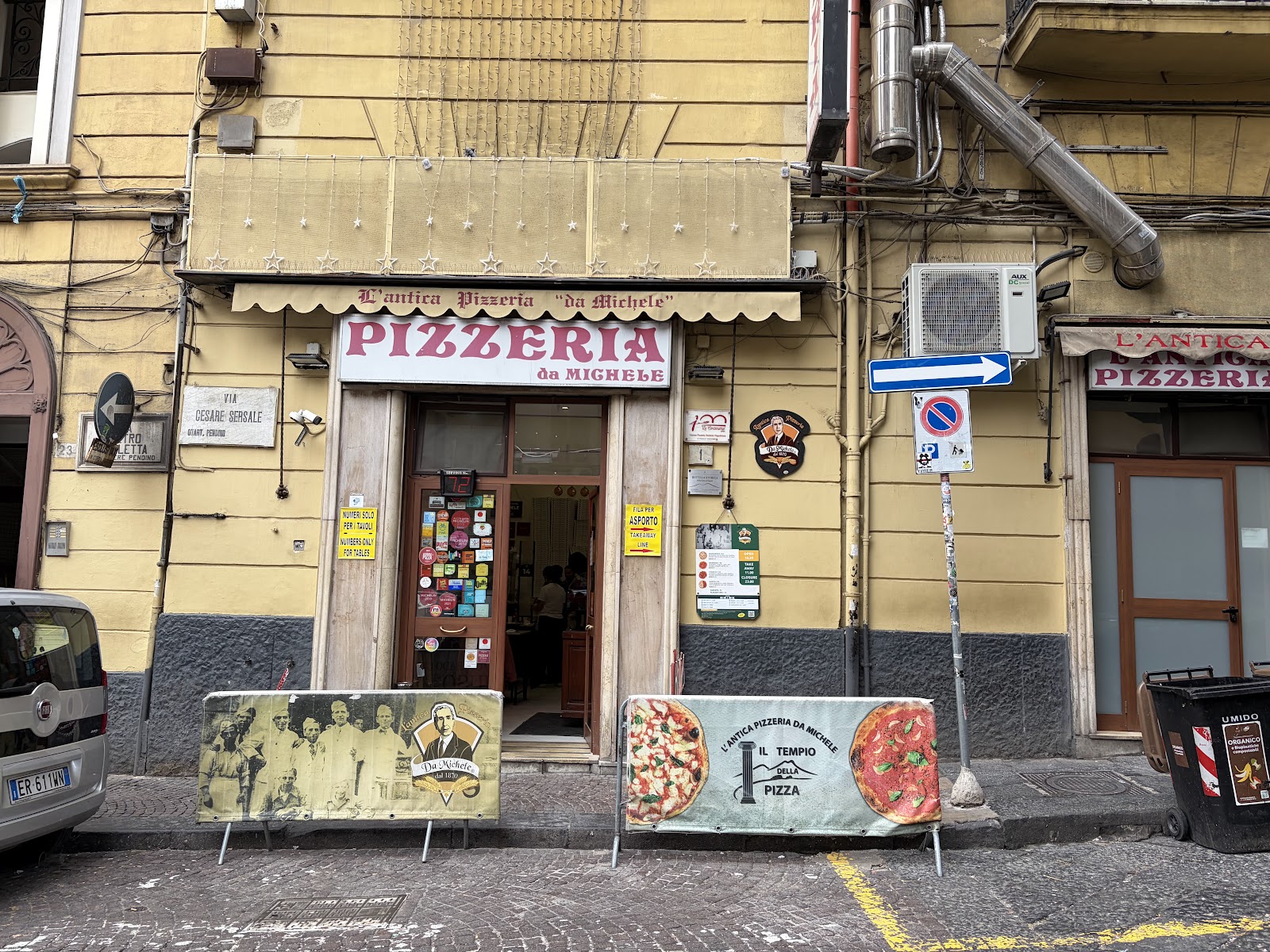
L'Antica Pizzeria da Michele
€€€€ · 76,171 reviews
Pizza Lovers say: "Thin, Rumali roti-like crust, simple 4-pizza menu, and great value. While delicious, it was not outstanding or 'the best' for one reviewer."
For a Vomero version with serious sourcing, Errico Porzio Vomero does a portafoglio that holds together cleanly. Errico Porzio's pizzerias are a touch newer than the historic addresses but the dough is in the same conversation.
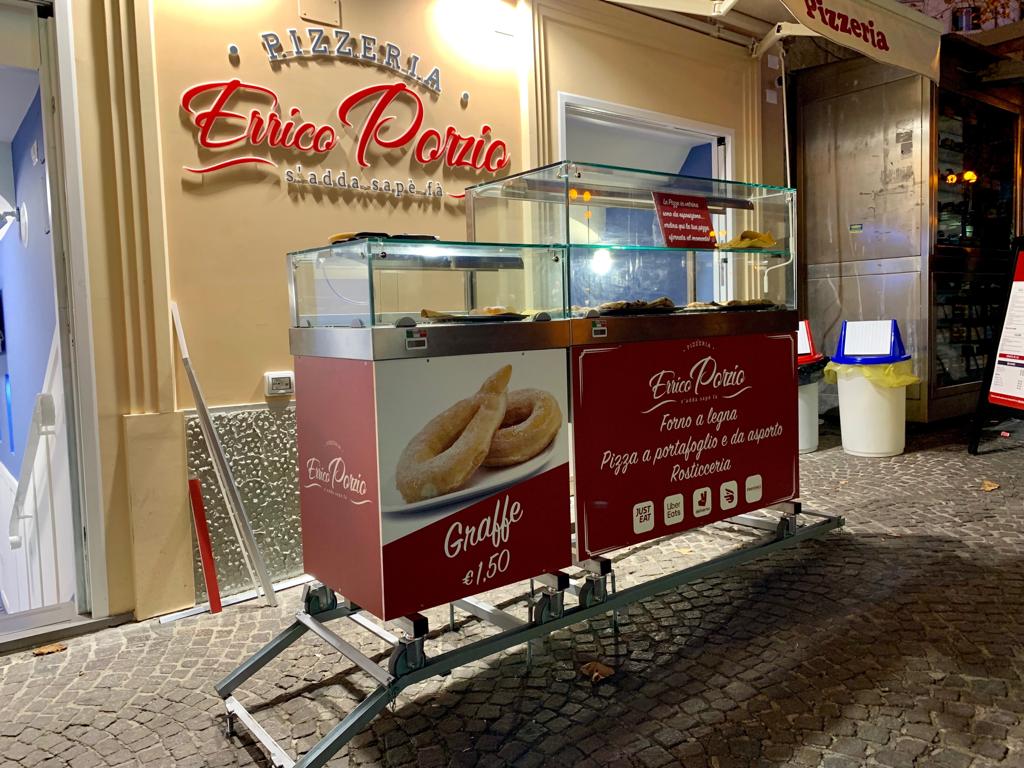
Errico Porzio Vomero
€€€€ · 2,577 reviews
Pizza Lovers say: "Amazing pizza, wide variety of options, and great quality. However, some found the bases overpowering or the salad underwhelming."
How does it fit the rest of the city's pizza?
Portafoglio sits inside the Neapolitan family next to pizza fritta, pizza all'ombra (the takeaway pizza with less sauce on top so it survives the walk), and the sit-down ruota di carretta. It is not a different style so much as a different format of the same dish, scaled for one hand and a parchment square.
If you want the full Naples street pass for under Euro 10: a fried at Di Matteo (Euro 4), a portafoglio at Port'Alba (Euro 2), a coffee on the walk to the next street (Euro 1.20). That is the Naples that the rest of the world calls cheap and that the city itself calls Tuesday afternoon.