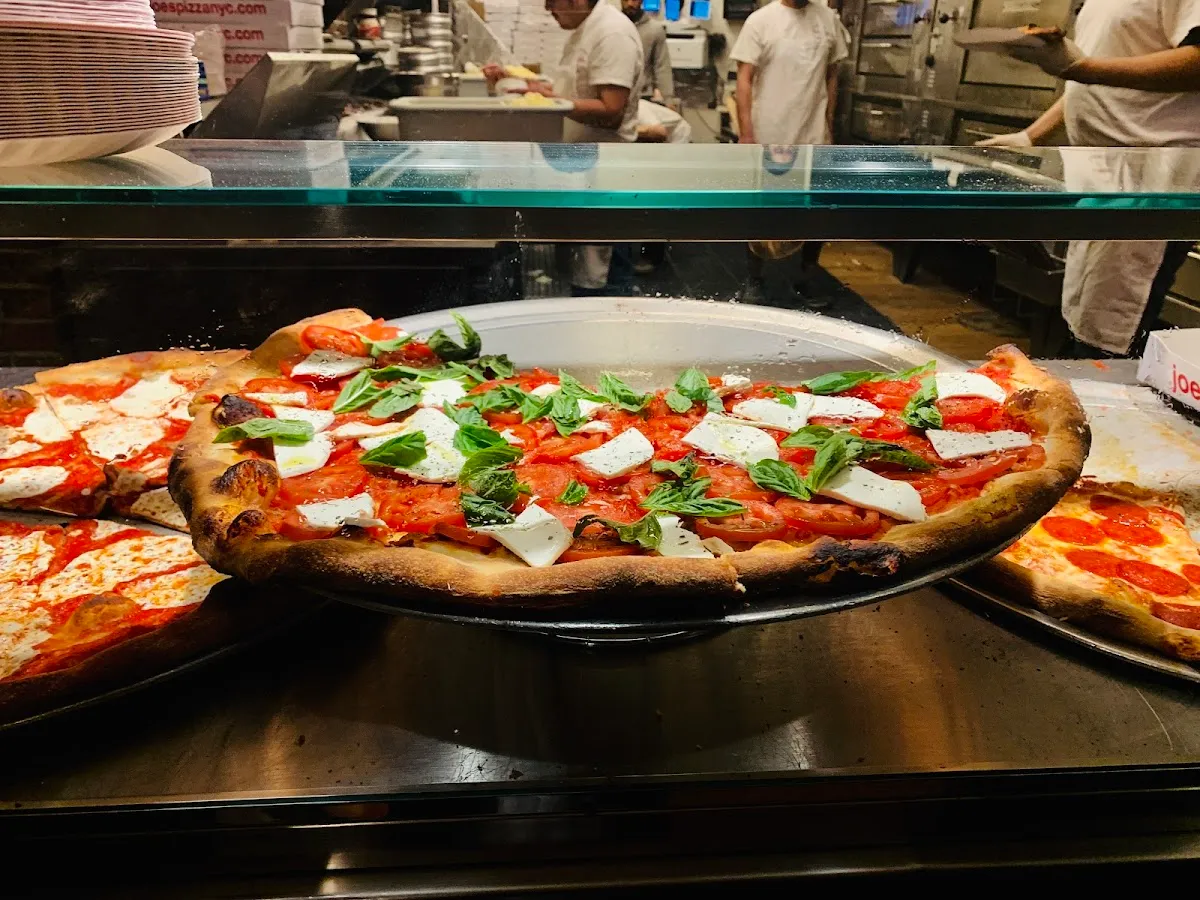
A New York pizza slice is the only food in the world that is sold by the geometry. Most pizzerias measure pizza in pies; New York measures it in slices, because a single $4 triangle is the unit of street eating that built the city's pizza culture. The pizza on top of that slice is a different style from anything its Italian ancestors recognized.
What makes a pizza New York style?
The New York spec is broader than the Neapolitan but still specific. The pizza is a large hand-tossed round, 18 to 20 inches in diameter, with a thinner crust than its Naples parent and a crisp bottom that holds shape under a fold. The toppings are low-moisture whole-milk mozzarella (not the fresh fior di latte of Naples), an oregano-spiked tomato sauce, sometimes pecorino or grated Parmesan, and oil on the rim. The pizza bakes for 5 to 8 minutes in a gas or coal oven at around 260 to 290 degrees Celsius, well below Neapolitan temperatures and over a longer cook.
The outcome is a slice that is large, thin, foldable in one hand, and structurally sound enough to eat while walking. The base develops a crisp bottom and a chewy outer ring with the high-heat blistering Naples produces in 60 seconds reduced to a more domesticated golden brown. New York pizza is the Italian-American adaptation, made for an American gas oven and an American volume of cheese.
Where the style came from
In 1905 a Neapolitan immigrant named Gennaro Lombardi turned a Little Italy grocery store at 53 1/2 Spring Street into the first licensed pizzeria in the United States. Lombardi had worked at a Naples bakery, and he built a coal-fired oven (the wood-fired option that powered Naples was replaced by the cheaper coal of industrial America). The pizza was sized to a 6-cent disk wrapped in paper for factory workers' lunches.
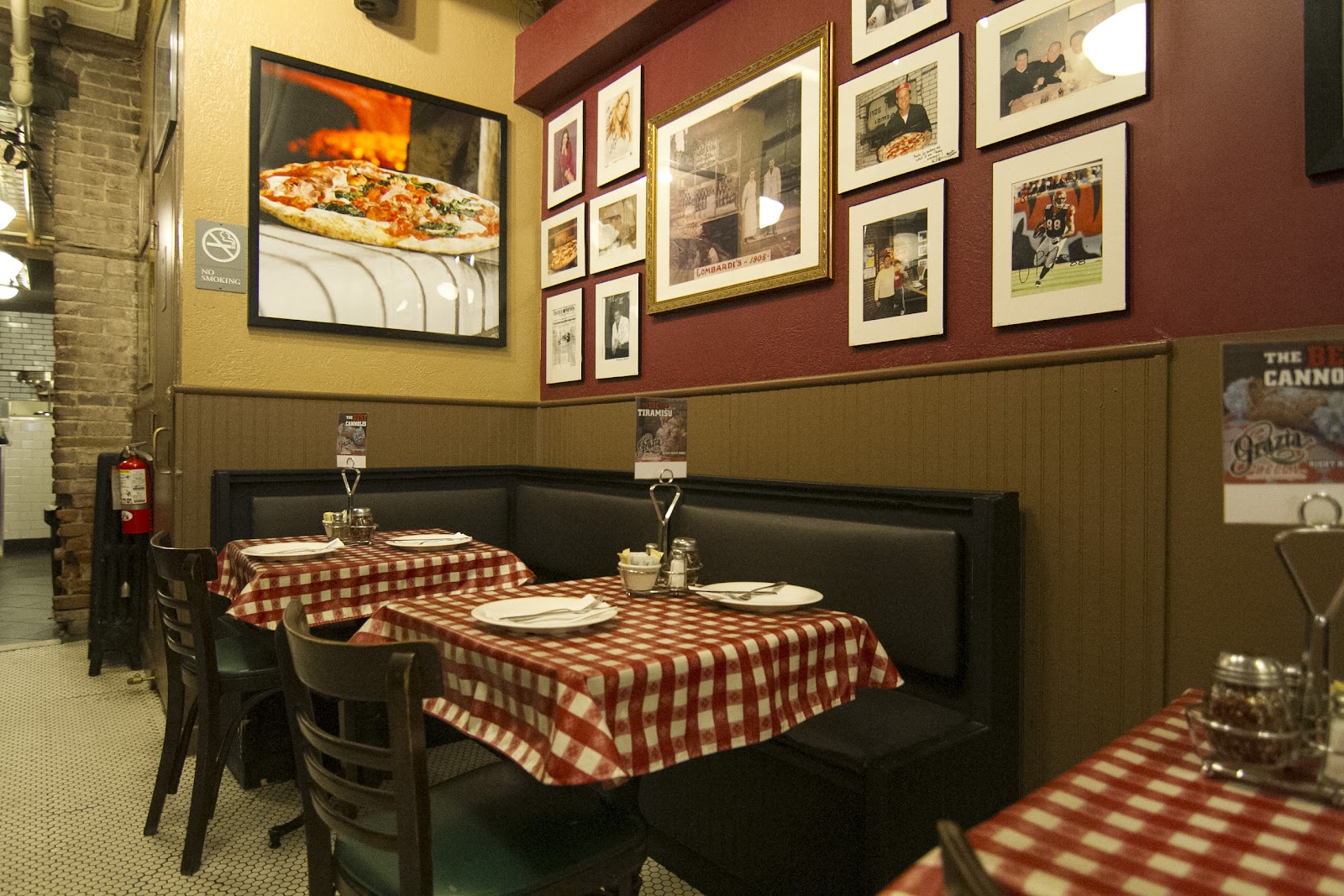
Lombardi's Pizza
€€€€ · 13,900 reviews
Pizza Lovers say: "The coal-fired crust is outstanding and the margherita pizza is fantastic. Some found the signature pizza too sour."
Lombardi trained the next generation of Italian-American pizzaioli, who fanned out across Manhattan and Brooklyn in the 1920s and 1930s opening their own coal-oven rooms. John's of Bleecker Street opened in 1929 in Greenwich Village. Patsy's opened in East Harlem in 1933, run by Patsy Lancieri, who became the personal pizzaiolo of Frank Sinatra and Joe DiMaggio. Totonno's opened in Coney Island in 1924 by Antonio "Totonno" Pero, a Lombardi alumnus, and is the oldest continuously operated pizzeria in the United States.
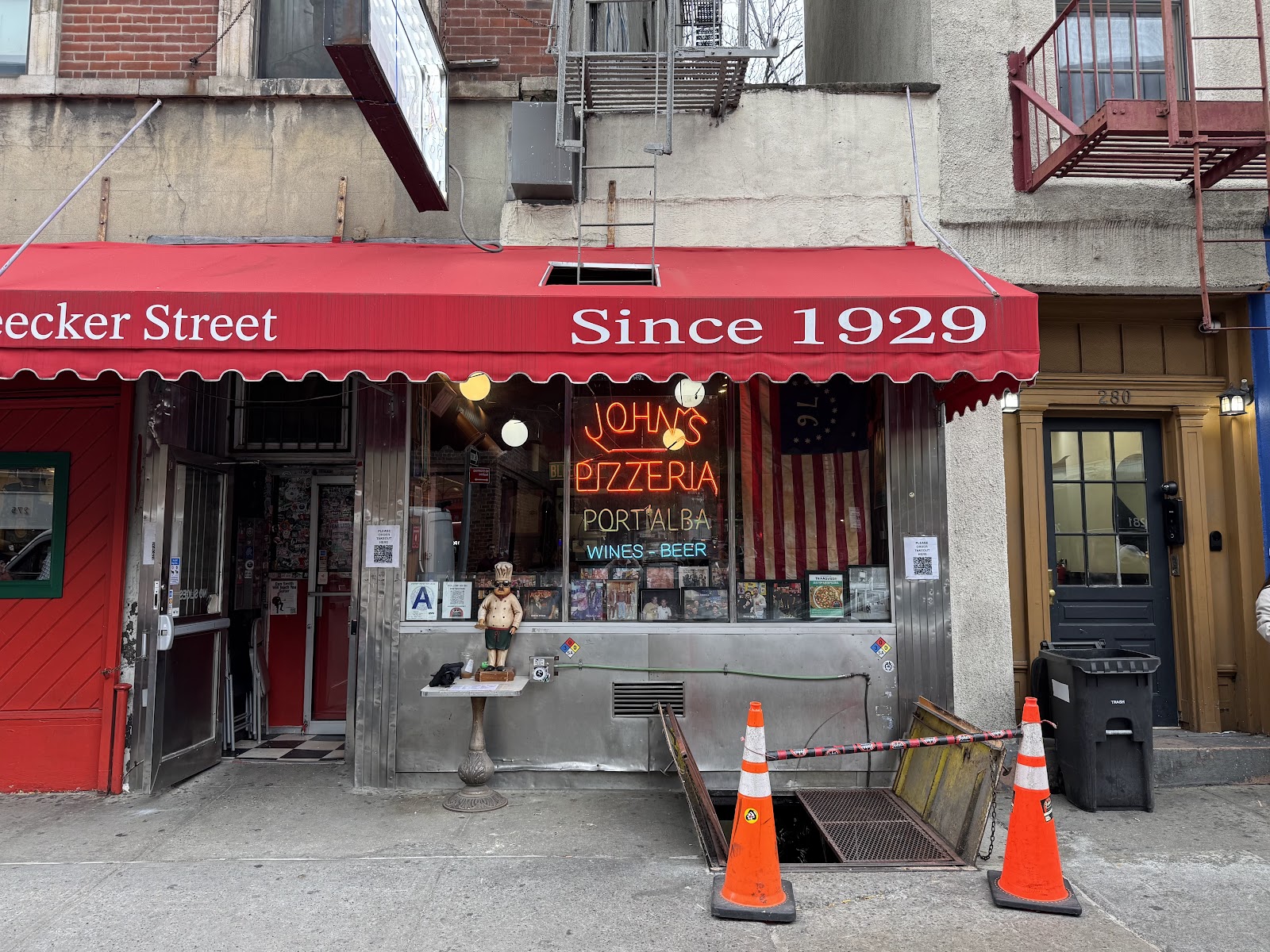
John's of Bleecker Street
€€€€ · 10,186 reviews
Pizza Lovers say: "Coal-fired crust perfection, phenomenal pepperoni with cherry peppers. Cheese sticks are average."
The coal oven was the period detail. Coal-fired pizza in New York is now legally protected: post-1990s clean-air ordinances grandfathered the existing coal ovens but banned new ones, so the handful of pre-grandfather pizzerias have a moat the next generation cannot enter. The flavor difference is real (coal burns hotter and drier than gas, which firms the crust and develops the underside char), and once you have eaten one you can tell.
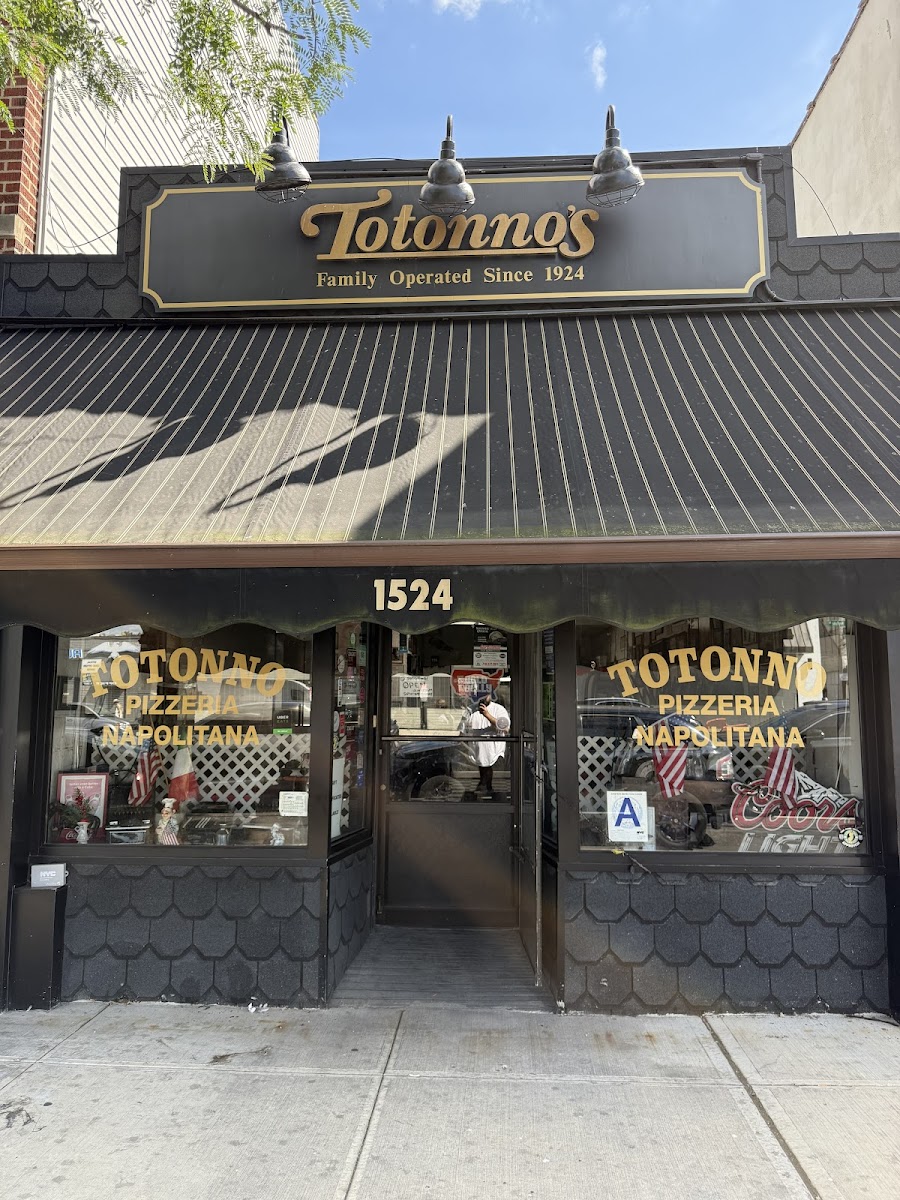
Totonno's Pizzeria Napolitana
€€€€ · 893 reviews
Pizza Lovers say: "Properly proofed dough, 800° F coal oven, and true pizza taste. Service can be a miss, and it's cash only."
The slice shops
By the 1950s and 1960s the second cultural layer of New York pizza arrived: the slice shop. A pizza cut into eight wedges and held under heat lamps, served on a paper plate, eaten standing at the counter. The slice shop is what most New Yorkers actually eat day to day, and it is the format that built the city's pizza economy.
The canonical Manhattan slice shop is Joe's Pizza on Carmine Street, opened in 1975 by Joe Pozzuoli (a Naples-born baker who arrived in Greenwich Village in the 1950s). Joe's serves the platonic ideal of a New York slice: large, foldable, slightly orange from the oil, with cheese that has just enough pull. The Carmine Street counter has been used as a film location in everything from Spider-Man 2 to The Departed.
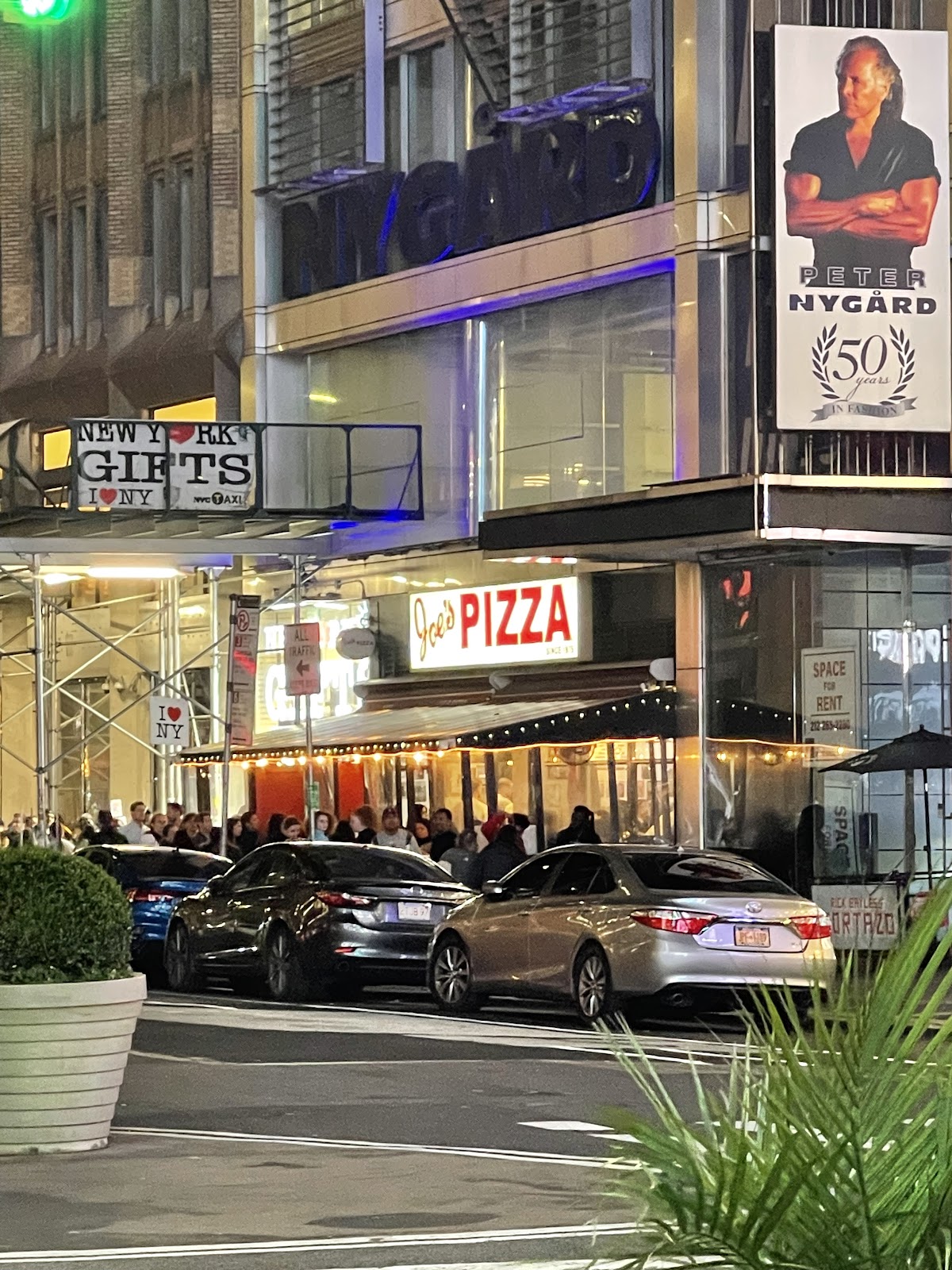
Joe's Pizza
€€€€ · 26,194 reviews
Pizza Lovers say: "delicious classic cheese pizza with a thin crust. Be prepared for long queues and a fast-paced, assembly-line service."
For a slice off the tourist track in the Bronx, Louie & Ernie's Pizza in Schuylerville has been operating since 1947 and runs an old-school slice menu that locals defend against any Manhattan claim. Ernie's spicy sausage slice in particular has a near-religious following.
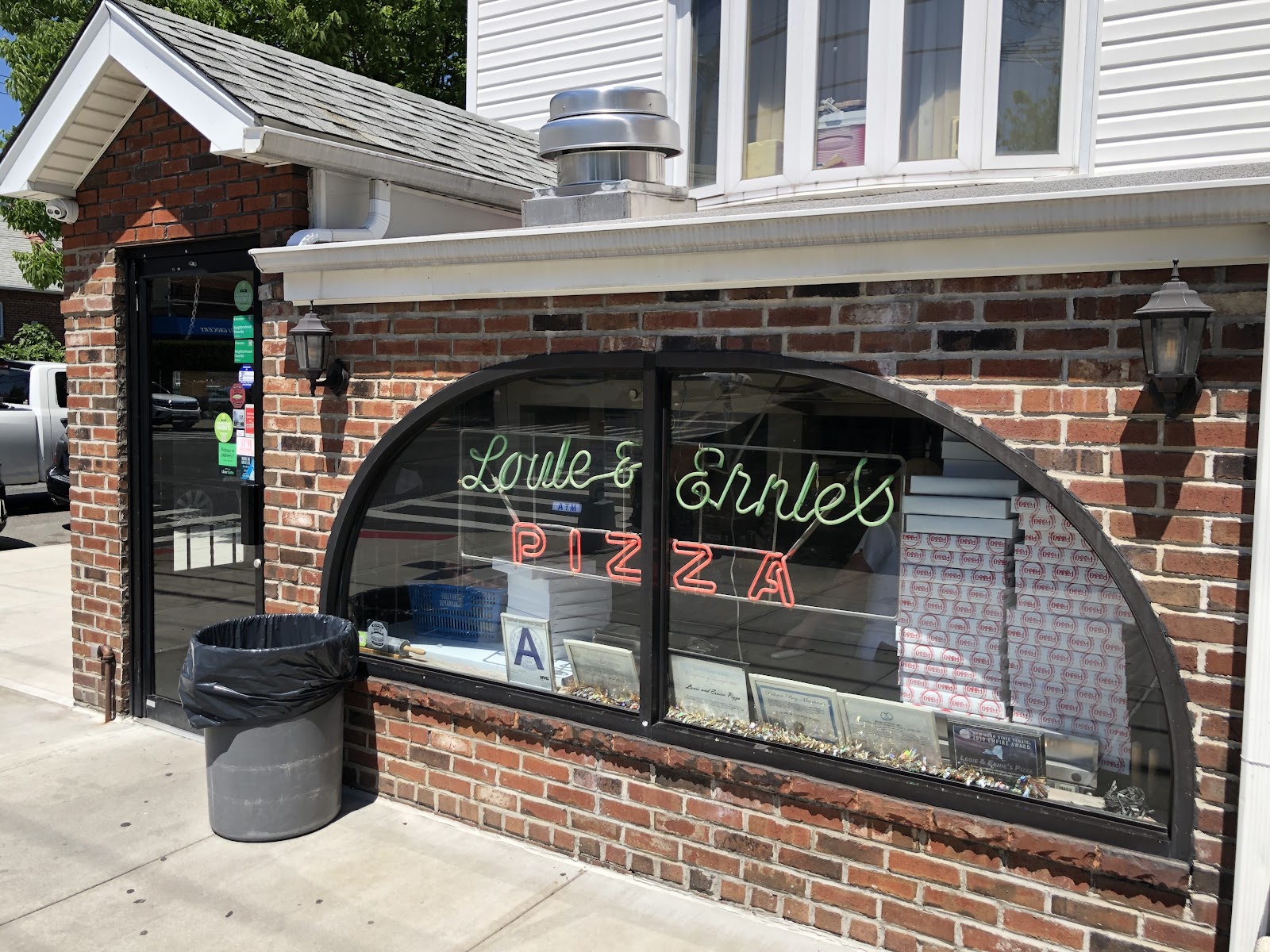
Louie & Ernie's Pizza
€€€€ · 2,456 reviews
Pizza Lovers say: "Great mozzarella, bright sauce, and fennel sausage. Crust can be burned, and it's cash only."
In modern Williamsburg, the slice culture has been reset by L'Industrie Pizzeria, opened by Massimo Laveglia in 2017 on South 2nd Street. L'Industrie runs a tight rotating menu of slices on a 24-hour cold-proofed dough with a thicker, breadier crust than the Manhattan template, and a burrata-and-prosciutto slice that has become the most-Instagrammed pizza in New York. The line starts forming at 11:45 am on weekends.
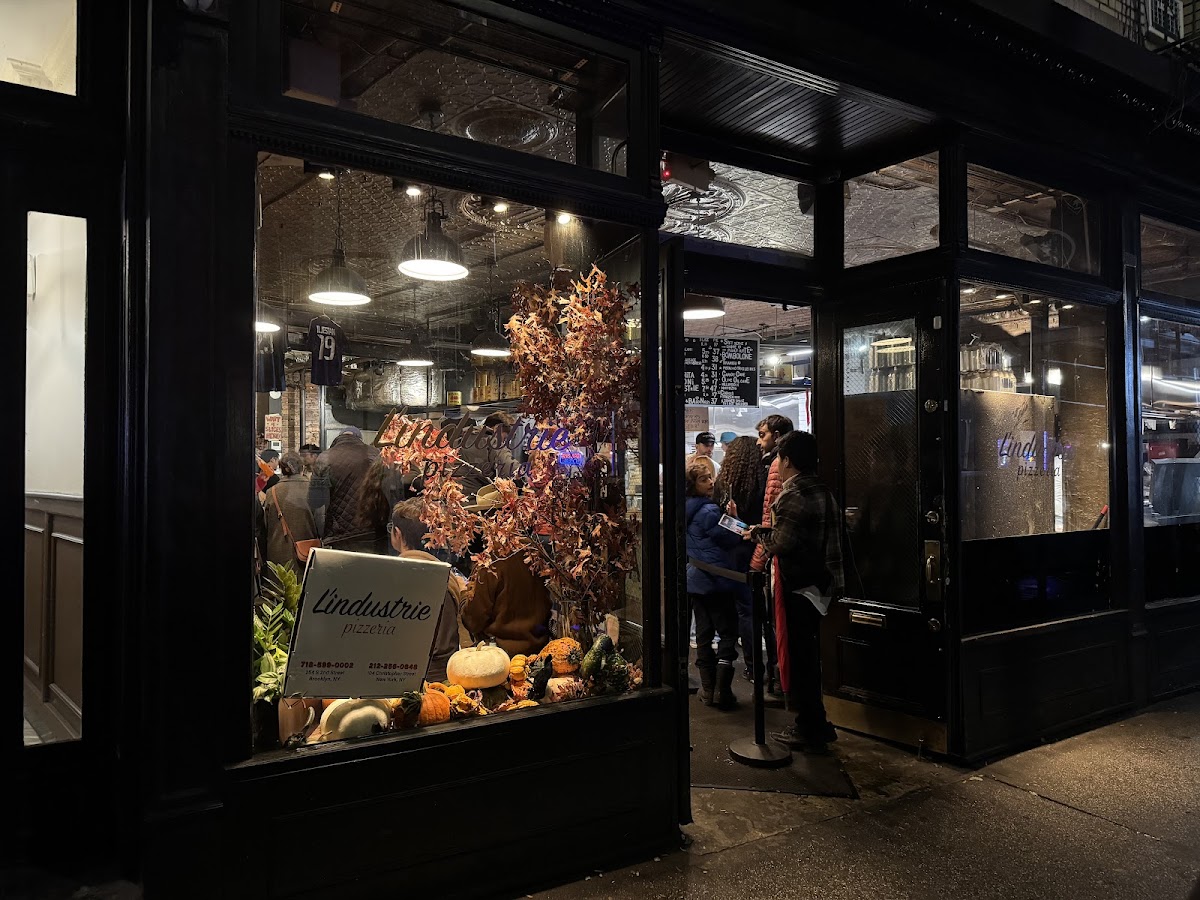
L'Industrie Pizzeria
€€€€ · 3,311 reviews
Pizza Lovers say: "Fig and bacon slice, burrata slice, and crust are amazing. Waits can be long, and it's standing room only."
The single-pizzaiolo Brooklyn rooms
The other layer of modern New York pizza is the small Brooklyn sit-down room run by one obsessive pizzaiolo. These are not slice shops. They serve whole 12-inch pizzas, sometimes by reservation only, and the lineage is closer to the Italian sit-down tradition than to the Italian-American slice culture.
Di Fara Pizza in Midwood is the oldest of these, opened by Domenico DeMarco in 1965 and famously kept open with DeMarco personally topping every pizza into his 80s (he passed away in 2022; his children now run the shop with the original recipe). Di Fara was the first New York pizzeria to be talked about as a pilgrimage destination by pizza critics, and the wait list at peak hours runs over an hour.
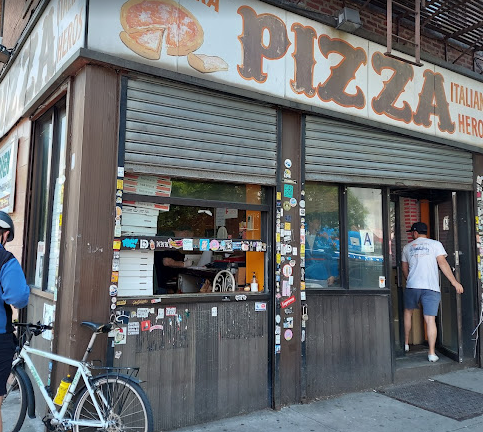
Di Fara Pizza
€€€€ · 4,633 reviews
Pizza Lovers say: "The sauce is incredible, basil and cheese ratio is perfect, and the crust is crisp. The Sicilian slice is delicious but heavy."
Lucali in Carroll Gardens is the modern equivalent. Mark Iacono opened it in 2006 after a self-taught journey through the city's pizza history, and runs a 30-seat dining room where the only menu items are pizza and calzones. No reservations, walk-in only, BYOB, and the line forms at 4:30 pm for a 5:00 pm opening. The pizza is paper-thin in the center with a charred, chewy outer rim, and Iacono cuts each one himself with kitchen shears.
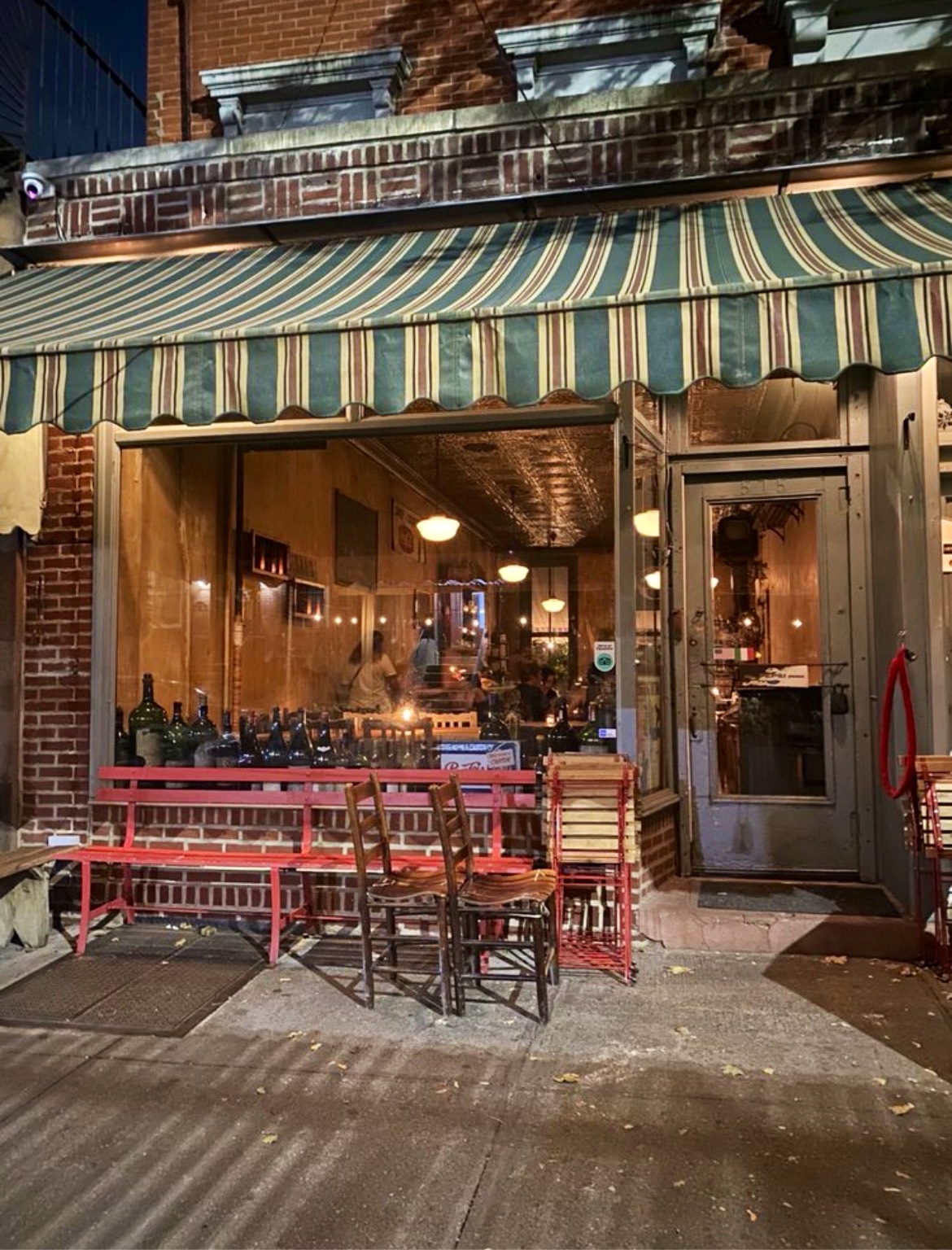
Lucali
€€€€ · 3,287 reviews
Pizza Lovers say: "A hand-rolled, thin-crust pie with charred edges and a rich tomato base. It's BYOB and cash-only, with no reservations, so expect a wait."
Juliana's, the DUMBO pizzeria reopened by Patsy Grimaldi in 2012 in the exact storefront where he had run Patsy's Brooklyn from 1990 to 1998, sits directly next to the modern Grimaldi's (the chain that bought his name when he retired the first time). Grimaldi unretired specifically to compete with the chain version of his original. Juliana's has gone on to top several 50 Top Pizza USA rankings.
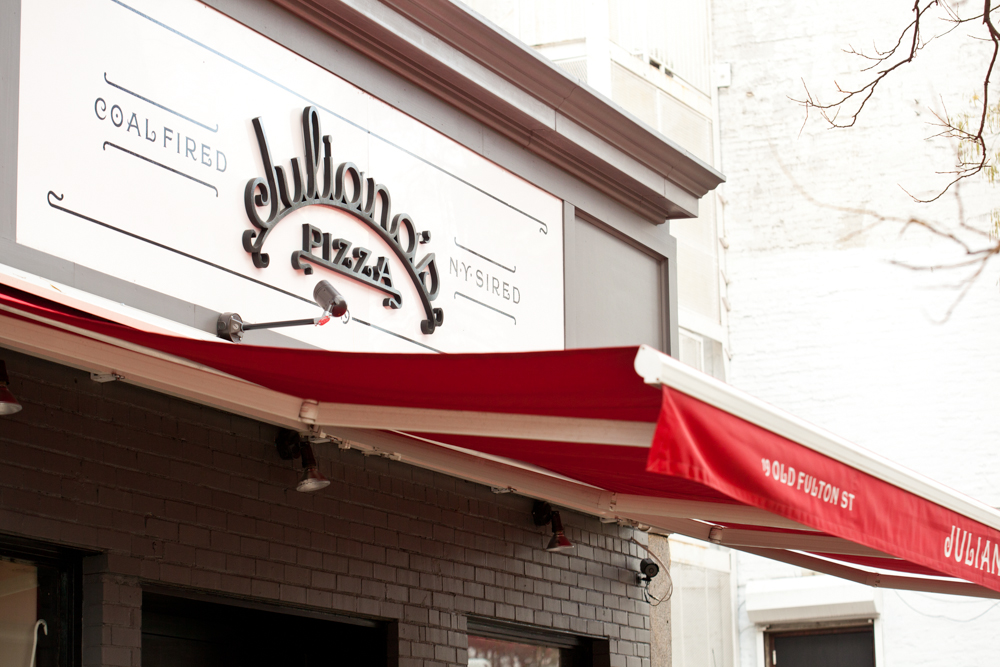
Juliana's
€€€€ · 10,086 reviews
Pizza Lovers say: "Thin, blistered crust, fresh mozzarella, and flavorful guacamole. More sauce would be nice."
How to spot the real thing
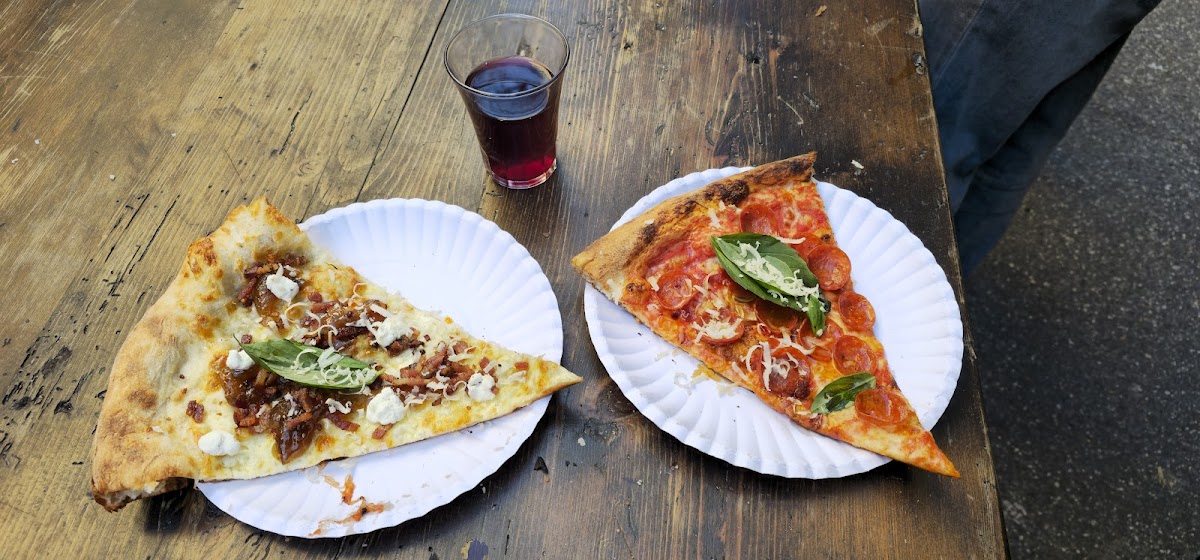
The slice. Real New York slice droops at the tip when held flat and folds in half along its centerline without cracking. If it stays stiff and flat, the crust is too thick or the cheese has set too far. If it splits or breaks when folded, the dough was over-proofed or under-cooked.
The fold. New Yorkers fold lengthwise (along the long axis of the wedge) into a U-shape and eat from the wide end inward. Tourists pile a knife and fork at it. Both work; only one signals local.
The price. A standard cheese slice in New York in 2026 is $3.50 to $5 at a real slice shop. The $1 slice (Two Brothers, etc.) is a different category and not what locals eat. A whole 18-inch pie at a slice shop runs $20 to $28; a sit-down Brooklyn room like Lucali or Juliana's runs $25 to $35 for a single pizza.
The smell. A good coal oven leaves a smoky, mineral undercurrent on the crust that you can taste in the first bite. Gas-oven pizza is cleaner but flatter on the back palate. Coal-fired Manhattan rooms are the only ones that smell like a pizzeria from the sidewalk.
Browse the full coverage of New York on the New York hub, the Brooklyn cluster at the Brooklyn page, or check the global rankings inside the NY-Style style hub.